
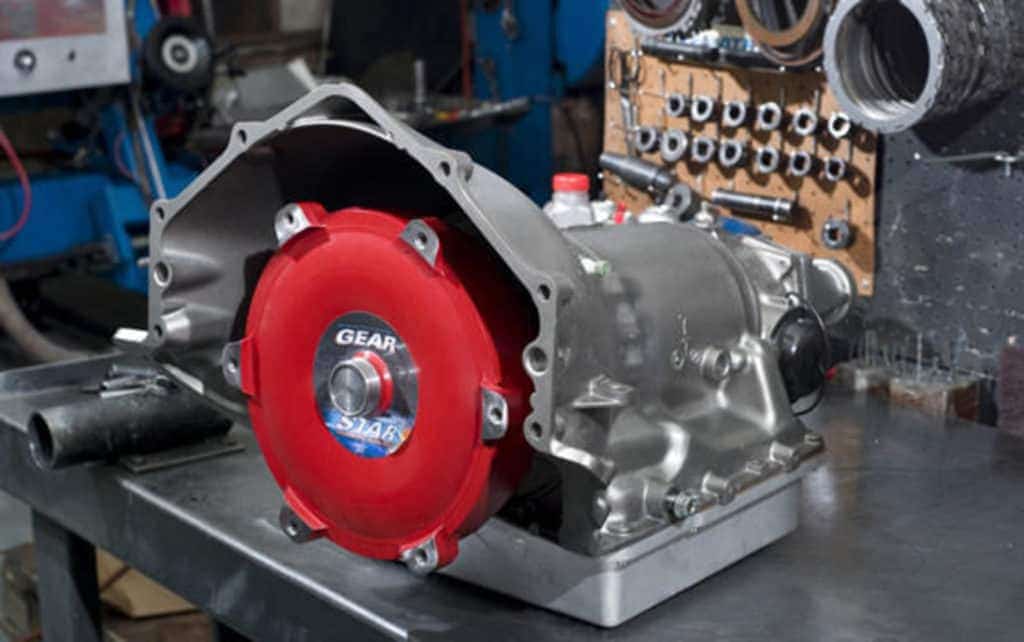
Choosing the Right Stall Converter for Your Turbo 350 and Engine Combo
Stall Speed
Stall speed is the engine RPM your converter allows before it stops slipping and starts driving the car. Put the trans in gear, hold the brake, open the throttle, and the RPM the engine settles at is the stall.
That number decides how your Turbo 350 launches. The goal is a converter that releases the engine right at the front of its power band. Miss it low and the engine drags off idle. Miss it high and you slip, make heat, and give away cruise RPM you never get back.
Gearstar doesn't spec stall from a chart. Generic ranges by category leave out too much of the combination, so every converter we build is spec'd for one application: the cam, the car, and how it gets driven.
Higher stall is not better. It is a trade. A big cam engine that makes nothing under 2,800 RPM needs stall to get to where it works. A stock 350 in a 3,600 pound Chevelle does not, and giving it stall just means a converter that never fully couples, fluid that runs hot, and 300 extra RPM at 65 mph.
The Most Common Mistake: Too Much Stall
The mistake we see most is choosing more stall than the application needs. It hurts performance and drivability and creates excess transmission heat. An overly loose converter can also cause stack shifting at wide open throttle: the RPM drops very little and the transmission runs through the gears too quickly. Our target is an 800 to 1,000 RPM drop between shifts for proper shift extension and peak performance.
Towing and Heavy Loads
If the TH350 is going in a truck or anything that pulls, stall is not the number you chase. Torque multiplication is. A converter multiplies engine torque while it is slipping, and a low to medium stall unit built with a tighter stator angle gives you that multiplication down low without living in slip. That keeps the engine from bogging pulling away from a stop and keeps fluid temperature under control on a grade. Tell the builder the trailer weight and the grade you tow, not just the engine.
Vehicle and Engine Setup
The converter has to match the whole combination, not the engine alone. Compression ratio, camshaft profile, cylinder head flow, and intake and exhaust tuning all move the torque peak, and the torque peak is what you are aiming the stall at.
Camshaft profile. Send the cam card. We look at duration at .050, valve lift, and lobe separation angle to understand how aggressive the idle will be and where the cam makes power. Too little stall behind a big cam can make the car pull hard in Drive at idle, or load the engine enough to stall it.
Rear axle gear ratio. Numerically higher gearing, 4.10 to 1 for example, multiplies torque at the wheels and pairs with higher stall because the engine gets to RPM quickly. Numerically lower gearing, 3.08 to 1, pairs with lower stall. A deep gear and a low stall converter is a car that feels lazy off the line and screams on the highway.
Vehicle weight. Heavier cars and trucks need lower stall than lighter cars with the same engine. Mass takes time to move, and a high stall converter behind a heavy car spends that time slipping and heating fluid. Lighter cars tolerate tighter, higher stall units.
Tire diameter. Larger diameter tires effectively raise the final drive ratio. Treat a tall tire like a taller gear when you pick stall, or you will end up one step too loose.
Power adders. A supercharger, turbo, or nitrous changes where the engine makes torque and how hard it loads the converter. Tell us what you run or plan to run, along with peak horsepower and torque.
Get one of these wrong and the converter is wrong, even if the stall number on the box was right for the engine.
Transmission Compatibility
The TH350 has specific requirements and they are not negotiable. The converter has to match the 30 spline input shaft and the flexplate bolt pattern. Check pilot hub diameter and mounting depth too. A converter that sits too deep or too shallow will destroy the front pump the first time you start the engine.
Most TH350 units are non lock-up. A stock TH350 case has no lock-up apply circuit and no wiring to command one, so a lock-up converter has nothing to lock it. Retrofitting one means machining the case for the circuit and adding external control. It is a build decision, not a parts swap. If overdrive and a locking converter matter to the car, the honest answer is to step to a different transmission rather than force the TH350 into a job it was never designed for. A 700R4 or a 4L60E both give you overdrive and lock-up out of the box.
If you are staying with the Turbo 350, our TH350 build page lists what changes inside the unit at each level, and the converter gets specified against that build rather than picked off a shelf.
Build Quality and Features
If you are buying an aftermarket converter, buy the good version. The failure modes here take the transmission with them.
- Furnace brazed fins. Brazed fins hold under high stall load. Tack welded fins let go, and the debris goes straight through the pump and the valve body.
- Heavy duty needle bearings. Slip makes heat, and heat kills bearings before it kills anything else.
- Anti ballooning plate. Under pressure the front cover wants to swell. A ballooned converter drags on the pump, changes mounting depth, and eventually splits.
- Billet stator hub. Worth it once you are pushing torque past what the stock unit was rated for.
- Clean, verified welds and a balanced assembly. An out of balance converter at 3,000 RPM is a vibration you will chase for months.
Budget and local parts availability are part of the decision, and there is no shame in that. What is not worth saving money on is the converter in front of a transmission you just paid to build.
Installation and Maintenance
Installation is simple when the converter matches the transmission. Two things go wrong and both are avoidable.
Full seating. The converter has to engage the input shaft splines, the stator support, and the pump drive lugs. That is three separate engagements and you will feel each one click. If the converter sits proud of the bellhousing face by more than the flexplate mounting depth, it is not seated. Bolting the trans up to force it is how pumps get destroyed.
Priming. Pour fresh ATF into the converter before you install it. A dry converter on first start runs the pump without fluid.
The TH350 is air cooled from the factory, meaning it relies on the pan and the case to shed heat. Any higher stall setup makes more heat than that can handle. Add an external cooler if you are running above roughly 2,500 stall, or if the car tows, sees track use, or sits in traffic in summer. Then check the fluid. Fluid that has gone dark or smells burnt is telling you the converter is slipping more than it should.
TH350 Applications and Typical Combos
The TH350 lived behind small block Chevy, Buick, Olds, and Pontiac engines and the big Cadillac units, in Camaros, Firebirds, Novas, Chevelles, Malibus, G bodies, C10s, and Corvettes from 1969 into the early 80s. That range is why converter selection is such a mature market and why generic advice fails so often.
What we need to spec your converter:
- Intended use
- Vehicle weight
- Peak horsepower and torque
- Any power adders
- Your cam card (duration at .050, lift, LSA)
- Rear gear ratio
- Tire diameter
Two cars with the same engine and the same gear can want different stall, because tire size, weight, and the shape of the torque curve are all in the equation.
How Stall Speed Is Measured
Stall speed is not a fixed property of the converter. It is the result of the converter and the engine together. Manufacturers publish a rating from a standard test load, usually a small block making a known torque figure. Behind an engine that makes more torque than the test load, the same converter stalls higher. Behind an engine that makes less, it stalls lower.
That is why a converter rated at 2,800 can measure closer to 3,000 behind a healthy 383 and closer to 2,500 behind a tired 305. It is also why a good builder quotes you a range and asks about your engine instead of selling you a number.
Diagnosing a Converter You Already Have
Before you buy another converter, find out what the one in the car is actually doing.
Check the stall. Trans in gear, brake held hard, wheels chocked, short throttle stab, read the tachometer. Do not hold it more than a few seconds and watch fluid temperature.
Check flash RPM. From a rolling start, note the RPM the engine jumps to at wide open throttle. That tells you what the converter does under load, which matters more on the street than a brake stall number.
Check cruise RPM and fluid temperature at a steady 60 mph. Excess slip at cruise shows up as both.
Then match the symptom to the cause.
Symptom | Likely cause |
Bogs off the line, picks up after a second | Stall too low for the cam |
High RPM, car does not move with it | Stall too high, or converter slipping |
Pulls hard against the brake at idle, or stalls at a stop | Stall too low for the cam |
RPM barely drops between shifts at WOT (stack shifting) | Converter too loose for the combo |
Fluid dark or burnt after one summer | Too much slip, no cooler |
Stall reads higher than the rating | Engine makes more torque than the test load |
Noise or vibration that follows RPM, not speed | Converter out of balance or ballooned |
Converter Diameter
Diameter changes stall behavior on its own. Stock TH350 converters are typically 12 inch. Race units come down to 10 inch and smaller. Less diameter means less rotating mass and less inertia, and for the same fin design and stator angle it generally means higher stall.
A larger converter cruises quieter, multiplies more torque at launch, and behaves better on the street. A smaller converter reacts faster, stalls higher, and multiplies less. For a street driven Turbo 350, stay in the 11 to 12 inch range. Small diameter converters belong on strip cars where nobody cares about part throttle manners.
Common Mistakes When Speccing a TH350 Stall Converter
- Choosing more stall than the build needs. This is the one we see most.
- Speccing stall off horsepower and ignoring the cam, the gear, and the weight
- Buying a race stall number for a street car and living with the slip
- Buying a lock-up converter for a case with no lock-up circuit
- Skipping the cooler and cooking the fluid in one season
- Ignoring tire diameter after fitting a taller tire
- Reusing the old converter after a failure, which puts the debris that killed it back into a fresh build
Match the Converter to the Combo
The right TH350 converter lands your engine at the front of its power band on launch, suits your gear, weight, and tire size, fits the case you have, and survives the heat you are going to make. Nothing about that comes off a shelf.
Gearstar builds and dyno tests every transmission to a customer's actual combination, and the converter is specified as part of that build. Give us the engine, the cam card, the rear gear, the tire diameter, and how the car gets driven. Call the shop at 330-434-5216, or start with the Gearstar transmission lineup and the GM performance transmissions we build.
More From the Shop
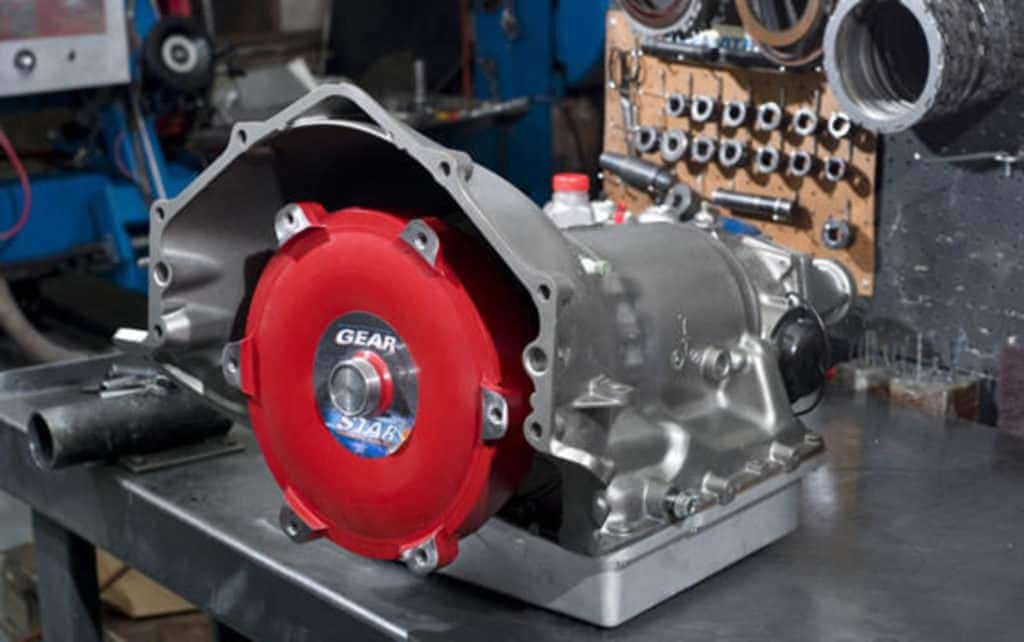
Choosing the Right Upgrade for a Turbo 350 Transmission Pan
The GM TurboMatic 350 (TH350) is a legendary transmission, powering classic muscle...
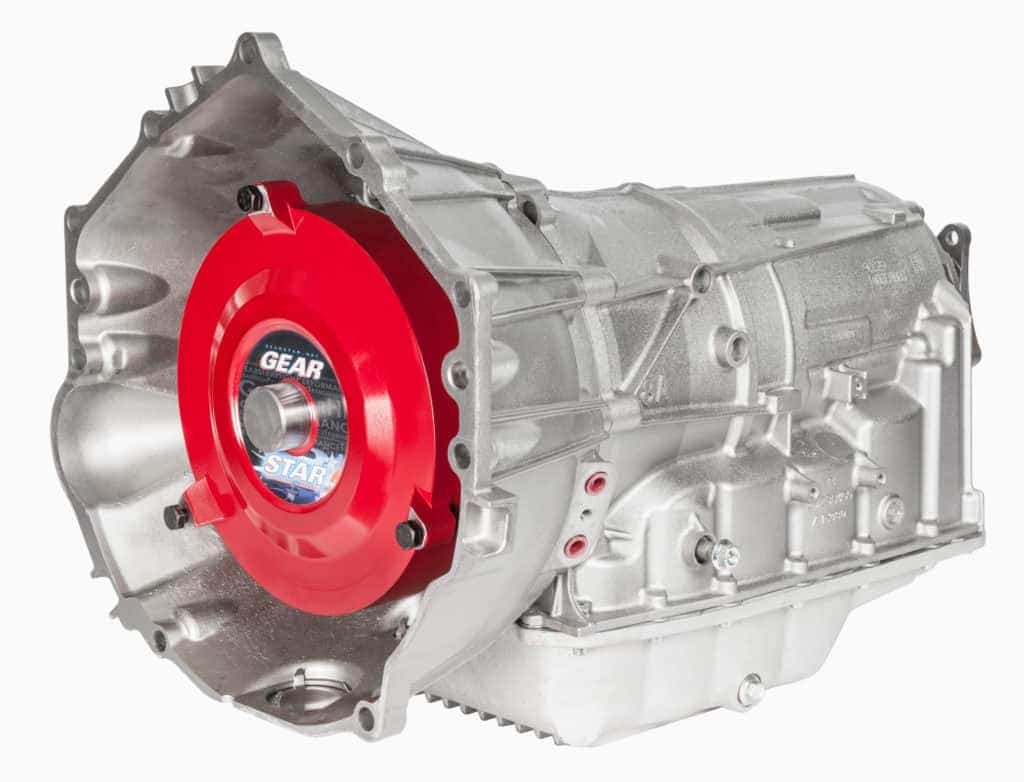
Upgrading Your 6L80 Torque Converter: Performance and Benefits
SUMMARY: The 6L80 transmission, a reliable 6-speed GM system, can develop performance...
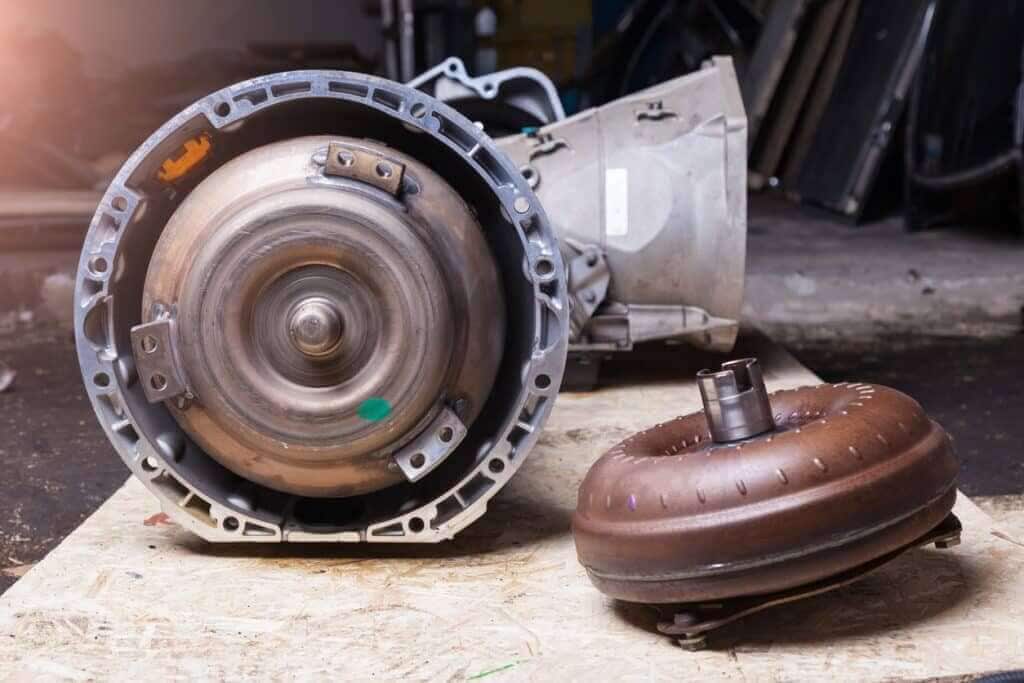
Why a 3200 Stall Converter is a Game-Changer for Your 4L60E Transmission
A 3200 RPM stall converter (or torque converter) can enhance your 4L60E...