
How Gearstar Builds Performance Transmissions
One builder, one transmission, start to finish
An order comes in, it gets a tag number, and then it becomes one person's responsibility until it is crated. Not a station on a line. One builder, from core selection through final calibration on the dyno.
That is the decision everything else follows from. When a single builder owns a unit end to end there is nobody to hand a problem to, which is a different kind of accountability than a quality control step at the end of a production line. Gearstar's builders are master technicians with a minimum of 20 years on automatics, trained through programs like the GM Technical College, most of them ASE certified. Several have worked together since the late 1980s.
Zack Farah started the company in 2002 after years in the family business, an industry leader in transmission remanufacturing that turned out 100 transmissions and 300 torque converters a day. He had done volume. What interested him was the other direction: units tailored to a specific car, built to a specification instead of a price. He hand picked eleven people from that world and narrowed it to six.
His own summary of the difference is still the clearest one anybody has offered: a transmission is what your wife has in her minivan. What Gearstar builds are horsepower transferring systems.
It starts with the core, which nobody thinks about
Most shops keep rebuildable transmissions in a core pile. Cores get stacked, dropped, and gouged, and the marks end up on the unit that goes under your car.
Gearstar stores late model cores individually on racks and pulls one to fill a specific customer's order. For a detail conscious owner that matters aesthetically. It matters more mechanically, because a case that has not been abused in storage is a case whose sealing surfaces and threads start out right.
From there the unit is fully disassembled by its builder and goes into an aqueous parts washer built by Mart Corporation, a $50,000 machine whose only job is to make sure nothing dirty goes back together. Then the builder lays every part out at his own station for pre-assembly inspection. High spot where the pan meets the case gets hand dressed with a file. Buggered bolt threads get chased clean. That is an hour nobody bills for and everybody notices two years later.
Parts are chosen, not sourced
The easiest place to save money on a transmission is the parts list, and it is the place where saving money shows up first.
- Planetaries: genuine GM units through ACDelco at around $400, not a $40 copy
- Frictions: Raybestos Racing Red or Alto Red Eagle, paired with Kolene treated steels
- Hard parts: 300M hardened internals, heavy duty Torrington bearings, hardened shafts and drums, extreme duty springs and sprags
- Converters: built by Yank Racing in Reno, with carbon fiber lockup clutch, flanged hub, furnace brazed internals, and a full billet cover
- Electronics: CompuShift controllers on electronic units
- External: Lokar remote filler dipsticks, kickdown kits, shifters and TV cables
- Cooling and pans: Hayden coolers and cast aluminum PML pans
On clutch packs specifically, the configuration changes with the application. Street and strip builds at moderate power get standard thickness Raybestos Red frictions with Kolene steels. Full race builds get expanded capacity packs, where both the steels and the frictions are made thinner so more of them fit, which increases total apply area. Stock paper frictions and plain steels are engineered for smooth shifts in a daily driver, which is a completely different design goal.
The converter is half the build, and it is not sold separately
Gearstar does not sell a transmission without a converter. That is a firm policy and it exists because the two parts have to be calibrated as a pair. Every converter is built for the specific transmission it ships with, electronically welded and computer balanced, and the pair is dyno tested together before either one leaves.
Stall speed is the setting that ties the converter to the engine. The working rule is to set stall about 300 rpm above where the cam lets the engine begin making its torque curve, which is a street performance and drivability number. Strip cars bring in race weight, body type, class rules, tire size, rear gear, displacement, stroke, compression, carb and manifold, and full cam specs, which is why that conversation happens with a builder rather than off a chart.
Every unit gets dyno tested, and the reason is not marketing
The shop runs an Axiline 97000 transmission dyno driven by a 40 hp electric motor producing 450 lb-ft, plus a second dyno powered by a GM V6. Simulated load comes from an 800 pound flywheel that replicates the inertia of a 3,000 pound car with a 3.73:1 rear axle. Each unit runs the equivalent of 50 to 100 miles.
What that catches, and what an untested transmission hides:
- Line pressure verified under load, not at idle on a bench
- Shift points, shift firmness, and shift timing measured and recorded
- Downshift behavior and converter lockup confirmed
- Leaks checked at the pump, front seal, speedo housing, rear seal, servo and accumulator housings
- Vibration and gear train noise heard during a simulated road test
The dyno also makes correction fast. The fixture rotates the unit 180 degrees for on the spot valve body calibration, and the pan and valve body come off quickly for recalibration of the valve body, governor, and shift solenoids. If one shift point does not happen at the same load and speed setting as the rest of its calibration package, it gets corrected and retested until it does. Computer shifted units such as the 4L65E and 4L85E run as long as 90 minutes, up to 120 miles, to prove the solenoids and pressure force motors will keep working over the long haul.
A small tell worth knowing as a buyer: if there is no ATF inside a transmission when it arrives, it was not dyno tested. A Gearstar unit shows up with 7 to 8 quarts already in it from testing and 3 more in the crate to top off after installation.
Cooling, because heat is what kills these
Heat is the single biggest threat to transmission life, and roughly 90 percent of it is made in the converter. Fluid does an enormous amount of work in there: it carries hydraulic pressure that can exceed 250 psi to apply the clutch packs, it transmits torque through the converter, then it has to come back and lubricate every bearing, bushing, thrust washer, planetary set, clutch pack, lip seal, sealing ring, and the valve body, and still be cool enough to do the whole cycle again.
So the requirement is not a suggestion. A 20,000 GVW Hayden cooler on anything up to 400 horsepower, a 30,000 GVW unit above that, and no radiator core integrated coolers, which are notorious for failing.
What the standard produces
Warranty returns run under one percent, against an industry standard closer to 30, and the warranty is 36 months or 36,000 miles. Tech lines run 7am to 10pm with builders rotating nights and weekends, because that is when people are actually under their cars.
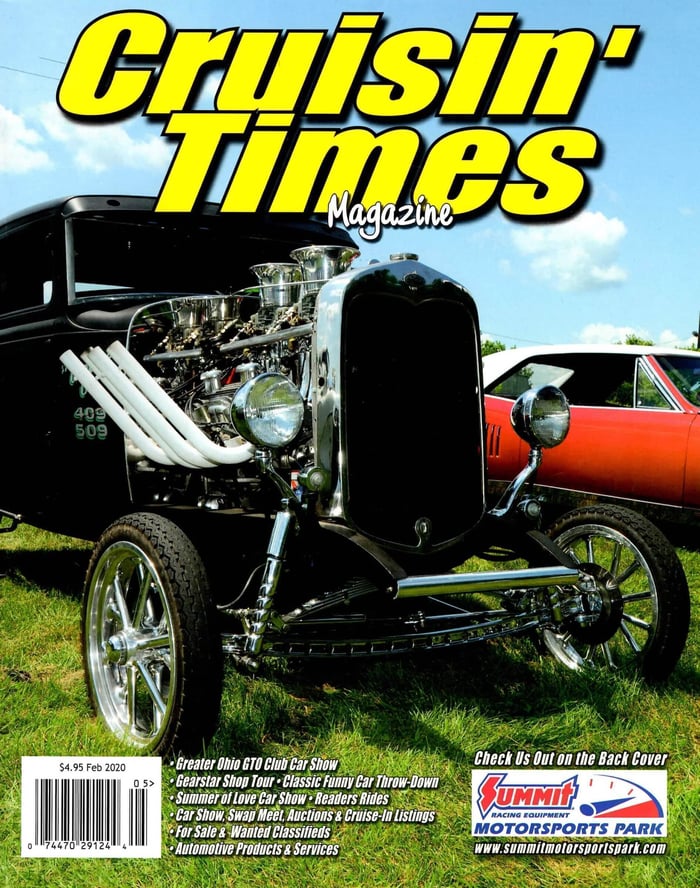
The work has gone behind cars for Boyd Coddington, Barry Lobeck, Southside Rods, and Mongoose Racing, and into the 2006 Street Rodder Tour coupe. Gearstar is the official transmission of the Leisinger Race Team, one of the rare automatic equipped competitors on the Goodguys autocross circuit. Units ship across the U.S. and Canada and overseas to Japan, Germany, England, and South Africa.
Zack's framing of the goal: a transmission purchase should be a one time thing, like an engine. You should only have to buy one.
What Gearstar builds
GM three speeds and overdrives including the Powerglide, TH350, TH400, 700R4, 200-4R, 4L60E, 4L65E, 4L70E, and 4L80E, plus late model five and six speeds including the GM 6L80 and 6L90, the Allison 1000, and Mopar 5-45RFE and NAG-1 units for the Challenger, Charger, and Grand Cherokee SRT8.
For context on where each GM unit lands: the Powerglide is the lightest, lowest drag, strongest option and the only transmission that can be built entirely from heavy duty aftermarket parts, capable of handling 2,000 horsepower, with the obvious downside that two speeds are not street friendly. A TH350 can be built to handle 700 horsepower and works well behind small blocks. A TH400 can be built to 850 and is the usual recommendation behind a big block street car, though it takes more power to turn.
The shop itself is a train depot built in 1900 in downtown Akron, Ohio, restored by Zack. Even the waste fluid gets recovered and burned in the building's heating system through the winter.
Frequently asked questions
Does Gearstar sell just a transmission?
No. Every transmission ships with a converter built and tested for it. The pair is the product.
How long does a build take?
It depends on the unit and the queue. Ask when you call, because the honest answer changes week to week.
What is the warranty?
36 months or 36,000 miles.
Can I have it installed there?
Yes. A unit can be crated and shipped with nearly everything needed for installation, including cables and fluid, or installed at the facility.
What does Gearstar need to know to spec my transmission?
Vehicle weight, horsepower and torque, rear gear ratio, tire size, and how you actually drive the car. That conversation happens between you and the builder, not a sales desk.
Talk to a builder about your combination
If you have a car worth building right, call Gearstar and talk to a builder about the combination. Give them the numbers and let them specify the transmission and converter together. That is the whole difference between a driveline that keeps up with the build and one that becomes the weak link in it.
Built once, to a standard that lasts.