
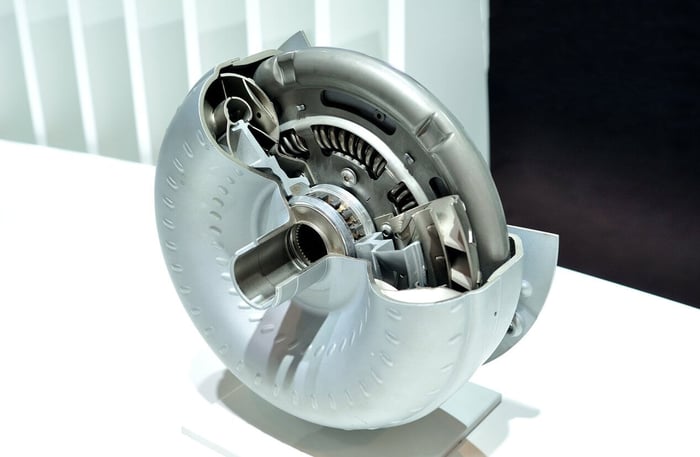
How the Right 700R4 Torque Converter Transforms Performance
If you’ve ever finished a round of engine upgrades: camshaft, intake, headers, maybe even EFI, and then felt underwhelmed the first time you left a stoplight, you’re not alone. The engine sounds mean, the dyno numbers look great, but off the line the car hesitates, the RPMs creep up slowly, and the whole combo just feels… flat.
In many cases, the issue isn’t the engine at all. It’s the torque converter.
The 700R4 is a solid overdrive transmission, but most of them are still running torque converters designed for stock, low-RPM engines from the ’80s and ’90s. When you pair one of those converters with a modified engine, you end up with a serious mismatch. Fix that mismatch, and the transformation is immediate. Throttle response sharpens, launches improve, and the vehicle finally feels like it should.
Let’s break down why the right 700R4 torque converter makes such a dramatic difference, and what actually matters when choosing one.
Why Stock 700R4 Converters Hold Performance Back
From the factory, the 700R4 was built for fuel economy and smooth drivability, not performance. That means a low stall speed, typically in the 1,400–1,800 RPM range, and a lockup clutch designed to handle modest torque.
That setup works fine behind a stock small-block with a mild cam. But once you add duration, lift, or airflow, the engine’s torque curve moves up the RPM range. Instead of making peak torque down low, it may not really come alive until 2,500 RPM or higher.
A stock 700R4 torque converter simply can’t get the engine there efficiently. When you step on the throttle, the converter drags the engine down below its power band, causing that familiar boggy, lazy launch. It’s not a lack of horsepower. It’s the converter preventing the engine from accessing it.
Stall Speed: The Foundation of Converter Performance
The most important characteristic of any performance torque converter is stall speed. Stall speed is the RPM the engine reaches under load before the vehicle starts moving. More importantly, it determines where the engine operates during initial acceleration.
A properly matched performance converter allows the engine to “flash” directly into its torque curve when you hit the throttle. Instead of struggling up from idle, the engine jumps into the RPM range where it actually makes power.
For most street-driven performance builds using a 700R4 transmission, stall speeds in the 2,200–3,200 RPM range are common. Heavier vehicles, deeper gears, and aggressive cams may benefit from even more stall, while tow rigs and street cruisers typically stay more conservative.
The right converter feels tight and responsive in normal driving, but aggressive when you lean into the throttle.
Why Higher Stall Doesn’t Mean Sloppy Driving
One common misconception is that higher stall automatically means poor street manners. In reality, converter efficiency matters just as much as stall speed.
A well-designed performance converter uses optimized fin angles, stator geometry, and fluid control to minimize unnecessary slippage once the vehicle is moving. That means normal cruising feels solid and predictable, not mushy or disconnected.
Cheap or poorly matched high-stall converters earn their bad reputation by generating excess heat and constant slip. A properly engineered unit delivers higher stall when you need it, and efficiency everywhere else.
Lockup Clutch Strength: The Weak Point You Can’t Ignore
The 700R4’s lockup converter was a big step forward for fuel economy, but the stock lockup clutch is not known for durability. Increased torque, aggressive throttle, or towing can quickly overwhelm it, leading to shudder, slipping, or total failure.
Performance 700R4 torque converters address this with upgraded lockup clutches, often using multi-plate or high-energy friction materials. These clutches offer significantly more holding power and heat resistance, making them suitable for modified engines.
A stronger lockup clutch also gives you flexibility. You can cruise efficiently with lockup engaged, then keep it disengaged under heavy throttle where torque loads are highest. Instead of being a liability, lockup becomes a performance advantage.
Heat Control: The Silent Killer of Transmissions
Heat is the number-one enemy of any high-performance transmission, and the torque converter plays a major role in heat generation. Excessive slippage inside the converter raises fluid temperatures, breaking down fluid and stressing internal components.
Performance converters combat this in two ways. First, better internal efficiency reduces unnecessary slip. Second, stronger construction ensures the converter can survive repeated high-load situations without deformation or failure.
Fully welded housings, furnace-brazed fins, and reinforced stator assemblies are hallmarks of quality performance converters. These features prevent fin flex, improve fluid flow, and maintain consistent performance even under hard use.
Size Matters, But Not How You Think
Torque converters are often discussed by diameter, but size alone doesn’t determine stall speed or performance. Smaller converters tend to stall higher naturally, while larger converters can be built to stall higher by altering internal geometry.
The difference lies in efficiency. A smaller converter designed for a higher stall can often maintain better fluid control than a larger converter modified to do the same job. That’s why two converters with identical stall ratings can behave very differently on the street.
What matters most is how the converter is engineered for its intended purpose, not just the number on the box.
Matching the Converter to the Real-World Build
Choosing the right 700R4 torque converter isn’t about chasing the highest stall number or copying someone else’s setup. It’s about matching the converter to the entire vehicle combination.
Engine torque curve, vehicle weight, rear gear ratio, tire size, and intended use all play a role. A muscle car, a pro-touring build, and a tow vehicle can all use a 700R4, but they need very different converters.
When the match is right, the result is immediate. Throttle response improves. Launches feel crisp instead of strained. The engine works less to move the vehicle, not more. That’s the difference a properly selected torque converter makes.
The Final Takeaway
The torque converter is often treated as an afterthought, but in a 700R4-equipped vehicle, it’s one of the most influential performance components you can change. If your engine feels lazy off the line, struggles to reach its power band, or exhibits lockup issues under load, the converter is likely the limiting factor.
At Gearstar Performance Transmissions, we work with builders, racers, and street enthusiasts every day to spec torque converters that actually perform the way they’re supposed to. We can help you select a 700R4 torque converter that delivers crisp launches, reliable lockup, and long-term durability.
If you’re ready to turn a sluggish takeoff into instant throttle response, contact Gearstar today and get matched with a torque converter that finally lets your build do what it was meant to do.
When the torque converter is right, the bog disappears, and the bite finally shows up.
More From the Shop
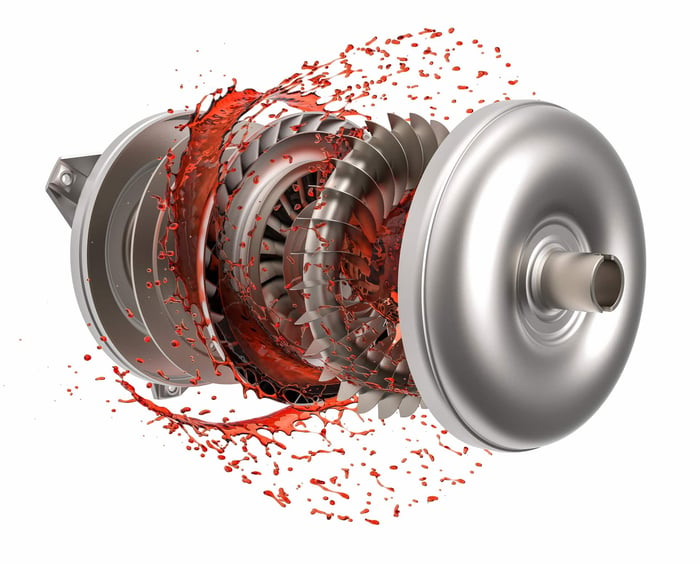
What Is a Torque Converter? Key Functions, Components, and Performance Benefits
If you’re building a performance car, refreshing a classic, or putting...
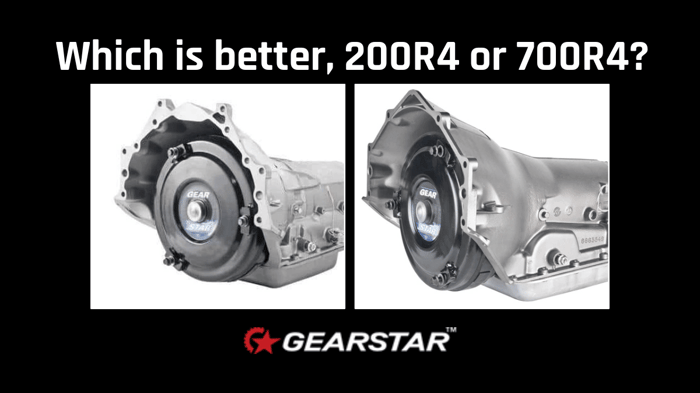
Which is better, 200R4 or 700R4?
The 200R4 vs 700R4 debate has been going on for decades, and for good reason. Both...