
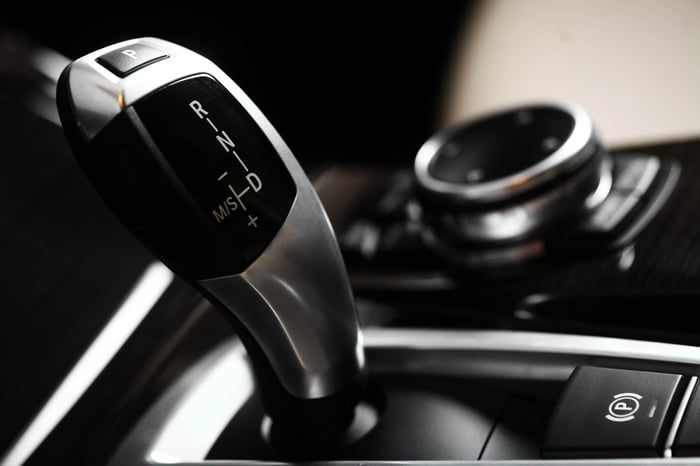
Automatic Transmission vs Manual: What You Need to Know for Performance Builds
When building a performance car, restoring a classic, or assembling a street/strip machine, one of the first decisions you must make is whether to choose an automatic transmission or a manual transmission. At first glance, both transmit power from the engine to the wheels, but the way they do so and how they perform under stress differ significantly.
Understanding the differences between an automatic transmission vs manual is critical for choosing the right setup for your build and maximizing performance, on the track or the street.
Automatic Transmission vs Manual: How They Work
Before we dive into performance, let’s break down the main differences between how these two transmission types work.
Automatic transmissions
Automatics use a torque converter to transfer power from the engine to the transmission, allowing the car to idle while stopped. The converter also multiplies torque at launch, giving a stronger start off the line. From there, hydraulic systems control clutch packs and bands that engage and disengage gear sets automatically. Many modern automatics feature lockup torque converters, which eliminate slip at cruising speeds, reduce heat, and improve fuel efficiency.
The gear sets inside an automatic are typically helical or straight-cut planetary designs, engineered for high-torque performance. These planetary gear sets work together efficiently to provide smooth, precise power transfer. Reinforced frictions, clutch packs, drums, and shafts are built to handle extreme horsepower and torque, while hydraulic circuits ensure consistent and repeatable shifts. All of this works together to remove variability and human error, which is critical when you’re pushing a build to its limits.
Manual transmissions
Manuals, by contrast, rely entirely on the driver. You operate the clutch to disengage the engine and shift gears yourself. While this gives direct control, it introduces variability. Human shift speed and timing can’t match the speed or consistency of modern automatics under high-load, high-horsepower conditions.
The main takeaway when comparing automatic transmission vs manual is this: automatics handle torque multiplication, precise gear changes under load, and repeatable performance, advantages that make them the go-to choice for serious high-performance builds.
Automatic Transmission vs Manual for Performance
When it comes to performance, speed, consistency, and durability are non-negotiable. Automatic transmissions are built to meet these needs, delivering reliable and repeatable results under extreme conditions.
Key Advantages of Automatics for Performance
- Faster Shifts: Performance-built torque-converter automatics deliver rapid, hydraulically controlled shifts that are faster and more consistent than a human-operated manual. This speed reduces lost time during gear changes in drag racing, street/strip setups, or track applications.
- Torque Multiplication: Torque converters give extra push at launch, helping maximize off-the-line performance.
- Repeatable Results: Every shift happens at the same timing, pass after pass, a critical factor for drag racing and track consistency.
- Lockup Efficiency: Lockup torque converters remove slip at cruising speeds, reducing heat, improving fuel economy, and preserving transmission life.
Comparing Driving Experience: Automatic Transmission vs Manual
- Automatic: Smooth, precise, and effortless, which is perfect for extracting maximum performance.
- Manual: Requires active input from the driver, offering control but slower and less consistent under high-load launches.
For high-performance applications, smooth and repeatable shifts almost always outweigh the engagement factor of a manual. This is especially true in drag racing, street/strip cars, and high-torque builds.
Performance Comparison: Automatic Transmission vs Manual
- Acceleration: Automatics shift faster, reducing lost time during gear changes.
- Torque Delivery: Torque converters multiply torque at launch, giving automatics a clear advantage off the line.
- Consistency: Automatic transmissions deliver the same shift timing every pass, which is crucial for street/strip and track performance.
Manual transmissions cannot match this level of speed or repeatability under extreme conditions. For any serious builder, automatics are the superior choice.
Manual Transmissions: Limitations in High-Performance Applications
Manual transmissions rely on the driver to operate the clutch and select gears. Under high-performance conditions, repeated launches, clutch engagement, and inconsistent shift timing can introduce heat, wear, and variability. Manual components also aren’t designed to handle extreme torque or horsepower over repeated runs.
Comparing automatic transmissions vs manual ones, it’s clear why automatics dominate high-power builds: faster, repeatable, and consistent shifts make extracting maximum performance far more reliable.
Fuel Efficiency and Durability
While performance is the priority, efficiency and longevity matter too.
Automatic transmissions with lockup torque converters reduce slip at cruising speeds. Without lockup, the converter continues to slip until engine RPM exceeds stall, creating heat and wasting fuel. Lockup mechanically couples the converter, eliminating slip, lowering heat, and improving fuel economy.
Reinforced clutch packs, drums, planetary gear sets, and hydraulic systems in automatics are built to handle repeated high-torque launches. Consistent, controlled hydraulic pressure ensures smooth engagement, reducing wear and maintenance needs over time.
Manual transmissions can be efficient at lower power levels, but in high-performance builds, repeated clutch engagement, inconsistent launches, and lack of torque multiplication can reduce both efficiency and component life. Heat buildup from slipping clutches or stalled launches can shorten transmission life and reduce overall reliability.
Which Transmission is Right for Your Build?
For serious high-performance cars, whether street, drag, track, or restomod, automatic transmissions are the standard. They handle more torque, deliver consistent shifts, reduce human error, and improve durability.
Manual transmissions may still be chosen for authenticity in restorations or low-power builds, but in modern high-performance applications, automatics are almost always the better choice.
Conclusion
When deciding between an automatic transmission vs manual for your build, automatics are the clear winner in high-horsepower, torque-heavy, and performance-focused applications. Faster, repeatable shifts, torque multiplication, reduced heat, improved efficiency, and consistent reliability make automatics the transmission of choice for serious builders.
Gearstar offers a full range of high-performance automatic transmissions, torque converters, and supporting components for street, strip, and track applications. Contact us to find the perfect transmission for your build and see why automatics dominate modern performance cars.
More From the Shop
6L80 Transmission 4x4 vs 6L80 Transmission 2WD: What’s The Difference
If you've spent any time planning a late-model GM swap or sourcing a replacement...
Which is better, 200R4 or 700R4?
The 200R4 vs 700R4 debate has been going on for decades, and for good reason. Both...