
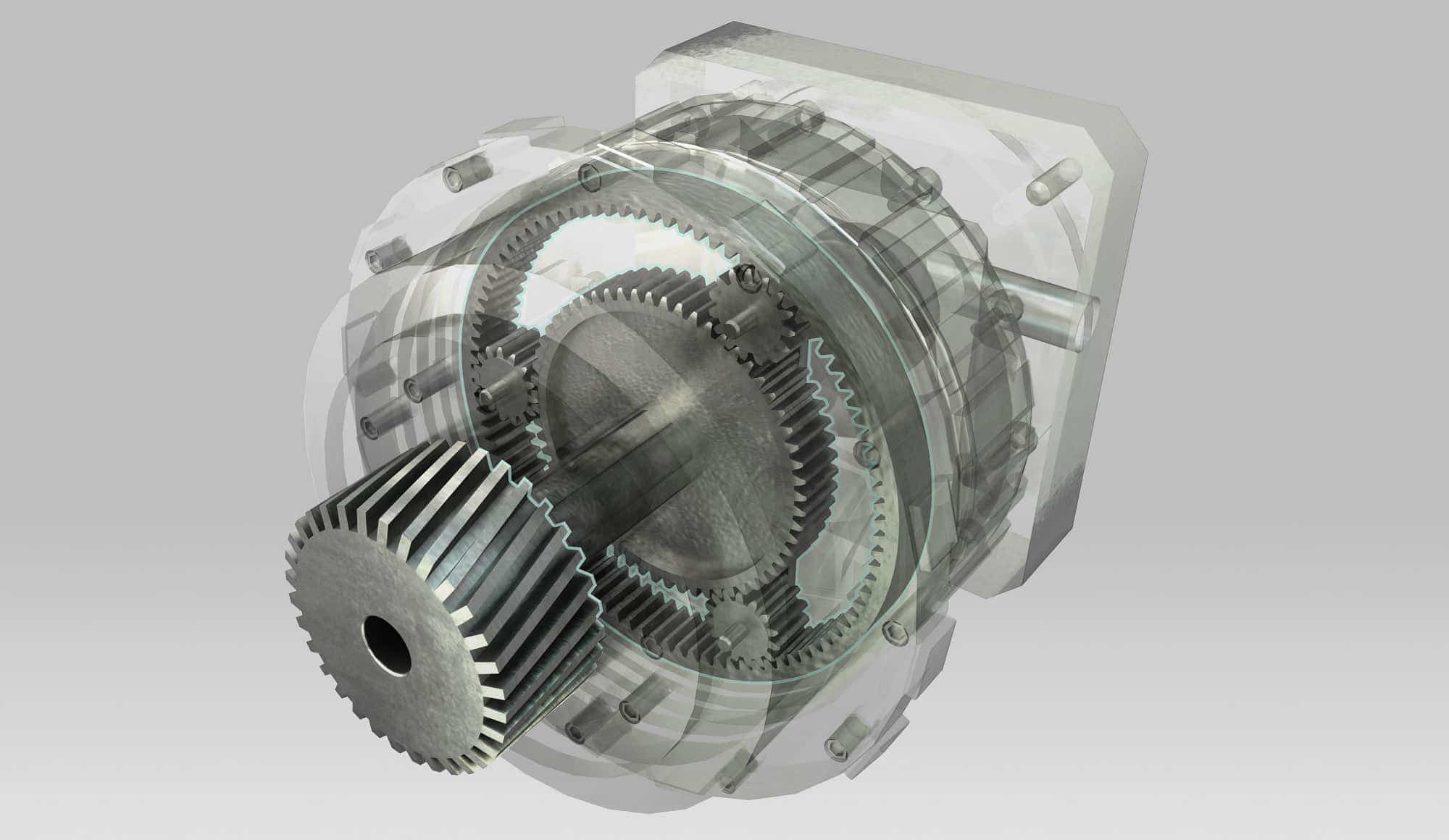
What Is a Lockup Torque Converter? Stall, Slip, and Why It Decides How Your Build Drives
What a lockup torque converter actually does
A lockup torque converter is a converter with a clutch inside it. When that clutch applies, the engine is mechanically coupled to the transmission input shaft at a 1:1 ratio and the fluid coupling stops slipping. That is the whole idea. Everything else in this article comes back to that one sentence.
Here is why it matters on a built car. A converter moves power through fluid. Fluid coupling means slip, and slip means heat. Roughly 90 percent of the heat a transmission makes is made in the converter, not in the gearsets. Lock the clutch at cruise and that heat source shuts off. The trans runs cooler, the fluid lives longer, and highway rpm drops to whatever the overdrive gear says it should be instead of whatever the slip says it is.
How the converter makes torque before the clutch ever locks
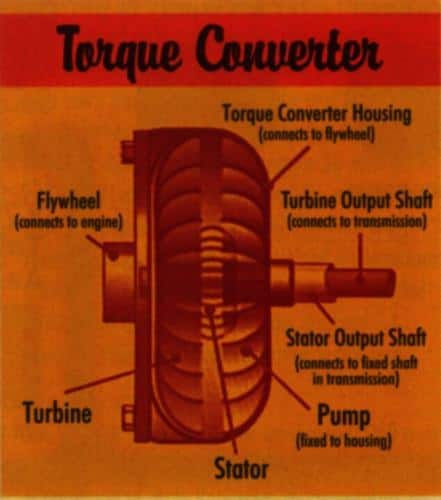
Before lockup does anything useful, the converter has to do its first job, which is multiply torque off the line. Five parts do the work.
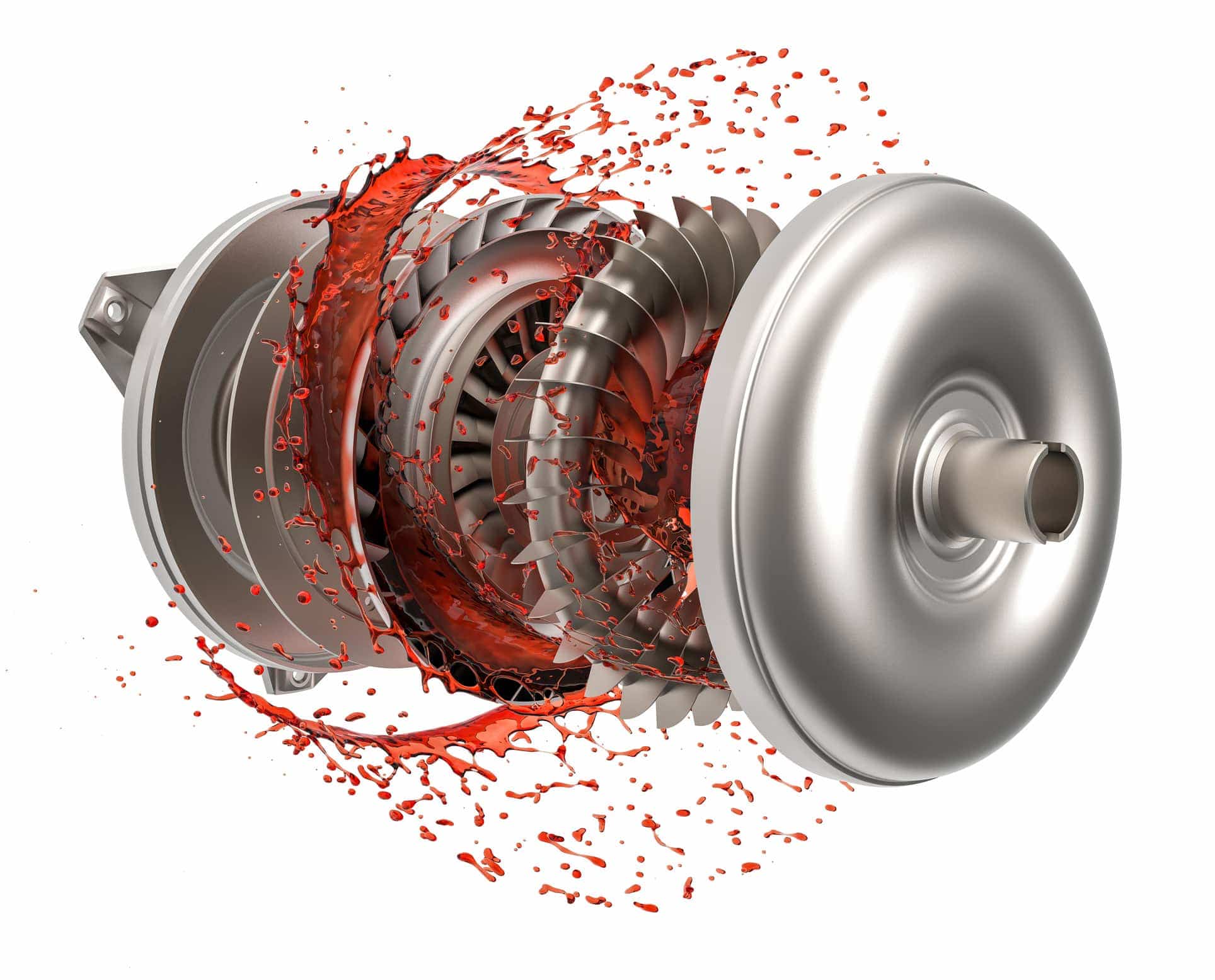
- The cover. Bolts to the flexplate and spins with the crank. On a lockup unit, the clutch applies against the inside of this cover.
- The impeller, or pump. Welded to the cover on most units, bolt together on high-end pieces. It drives the transmission pump gears and throws fluid outward.
- The turbine. Splined to the input shaft. Fluid off the impeller hits the turbine fins and turns the shaft.
- The stator. Sits between the two on a one way roller clutch and redirects returning fluid back into the pump in the right direction. This is where torque multiplication comes from. Pull the stator out and you have a fluid coupler with no stall and a soft, sad launch.
- The lockup clutch. Single disc or multi disc depending on the application. Applies at cruise, kills the slip, and hands you a direct connection.
Fluid is the sixth component whether the parts diagram admits it or not. Condition, level, and cooling decide how long the other five last.
Stall speed and lockup are two different settings, and builders mix them up constantly
Stall speed is the rpm where the converter starts putting real power into the transmission. Lockup is the point where slip stops entirely. You can run a high stall converter and still cruise locked, and that combination is the reason lockup converters exist for performance cars at all.
Run the numbers on a common setup. Say you have a 2,800 rpm stall converter and your cruise rpm in overdrive is 2,100. Without a lockup clutch you are sitting below stall on the highway, slipping the whole way, making heat every mile. With lockup, the clutch applies at cruise and the slip goes to zero. You keep the stall you picked for the launch and you stop paying for it on the interstate.
That is the honest case for lockup on a street driven build. It is not about fuel economy targets. It is about being able to spec the stall your cam actually wants without cooking the trans on the drive home.
Picking stall for the combo
Zack's rule of thumb at Gearstar, and it has held up for a long time, is to set stall roughly 300 rpm above the point where the cam lets the engine start making its torque curve. That is a street performance and drivability number. Strip only cars open up a much longer list: race weight, tire width and diameter, rear gear, displacement, stroke, compression, carb and manifold, and the full cam spec. If you are chasing a 60 foot number, that conversation happens on the phone with a builder, not off a chart.
Why lockup exists at all
Early automatics slipped between the crank and the input shaft all the time, which is where the slushbox reputation came from and it was earned. When overdrive arrived to drop highway rpm, the slip problem got worse, not better. The engine turned slower, the converter slipped more, the heat went up, and the fuel economy the overdrive was supposed to deliver got eaten by the converter. Clutching the converter at cruise fixed all of it at once.
The performance version of that story is the same story. Overdrive plus lockup is what makes a modern overdrive automatic worth swapping into a car that came with a three speed. Overdrive without lockup gives back most of what it promised.
When the lockup clutch is not working right
A lockup clutch fails in three directions, and each one feels different from the driver's seat.
- Stays locked. The engine dies when you brake to a stop, the same way a manual dies if you forget the clutch pedal. Hard to miss.
- Never locks. Fuel economy drops, coolant and trans temps climb, and the trans runs hot on long highway pulls for no obvious reason.
- Locks but slips. Engine speed drifts up at a steady road speed. This is the one people ignore for months because nothing feels broken yet.
Two normal conditions also stop lockup and get misdiagnosed as failures. A cold engine will hold lockup off until coolant temperature comes up, in some calibrations as high as 120 degrees F. And if the overdrive unit is locked out, converter lockup is locked out with it. Check both before anyone pulls a pan.
Worth noting on diagnosis: on a lot of cars the apply is gentle enough that you will not feel it. Watch shift timing and quality, and put an auxiliary tach on it if you want certainty. Release is easier to catch than apply, because the converter unlocks the moment you touch the brake or lift off the throttle.
What lockup changes on different builds
- Street and strip. High stall for the launch, lockup for the drive home. This is the combination that makes a car livable without giving up the hit off the line.
- Restomod and modernized classic. Lockup plus overdrive is most of the reason the swap is worth doing. Lower highway rpm, less heat, quieter cruise, none of it at the cost of how the car looks or sounds.
- Towing and heavy vehicles. Torque multiplication down low, thermal capacity up top. Lockup at cruise keeps sustained pulls from stacking heat.
- Dedicated strip car. Often no reason to run lockup at all. If it never sees the highway, it never needs the clutch.
Spec it against the whole combination
Converter selection is a combo decision, not a part number decision. Before anyone quotes you a stall, they should know:
- Engine torque and horsepower, and where in the rpm range they show up
- Cam profile
- Rear gear ratio and vehicle weight
- Intended use, honestly stated, street, strip, tow, or all three
- Lockup or non lockup, and what will control the lockup
- Cooling capacity, which is not optional above 400 horsepower
On cooling, Gearstar insists on a 20,000 GVW Hayden cooler on anything up to 400 horsepower and a 30,000 GVW unit above that, and recommends getting rid of radiator core mounted coolers entirely. Those integrated coolers fail, and when they fail they put coolant into the transmission.
The part most people get wrong
Lockup is not a fuel economy accessory bolted onto a performance part. It is the thing that lets a performance converter live on a street car. Skip it and you either give up stall to protect the trans, or you keep the stall and pay for it in heat. Neither one is a good trade when the clutch solves it.
Every Gearstar converter is built for the specific transmission it ships with, welded, computer balanced, and dyno tested as a package with that transmission before it is crated. Gearstar does not sell a transmission without a converter, and that is on purpose. The two parts have to be calibrated together or the numbers on the box mean nothing.
Frequently asked questions
At what speed should a torque converter lock up?
There is no universal number. It depends on the calibration, the gear the trans is in, coolant temperature, and throttle position. On an electronically controlled unit you can set it. On a programmable controller you can set it by mph, which is the practical way to dial it for tire size and rear gear.
Does a lockup converter hurt performance?
No. The clutch is not applied during a launch or under hard acceleration, so it does not touch the part of the run you care about. It applies at cruise, where slip was only costing you heat.
Can I run a high stall converter with lockup?
Yes, and that is the point of running one. Spec the stall for the cam and let the clutch handle the highway.
Why does my converter not lock up when the engine is cold?
Most calibrations hold lockup off until coolant temperature comes up. That is normal. If it still will not lock once the engine is at temperature, start looking at the solenoid, the wiring, and whether overdrive is being locked out.
Does lockup reduce transmission temperature?
Significantly, at cruise. The converter is where the heat is made, so removing slip removes the heat source. It does nothing for heat made under load at low speed, which is what the cooler is for.
Spec your converter with the transmission
If you already know your combo, call Gearstar with the cam, the gear, the weight, and how you actually drive the car, and get a converter and transmission specified as one package instead of two guesses. If you are shopping converters on their own, the converter side of the shop is at converter.cc.
Build it once. Build it to hold.
More From the Shop
Torque Talk: Benefits of Installing an Aftermarket Torque Converter
If you own a car with an automatic transmission, chances that you've heard the...
Talk The Torque
If there was a vote for the most misunderstood automotive component, we’re willing...