What Is a Torque Converter? Key Functions, Components, and Performance Benefits
If you’re building a performance car, refreshing a classic, or putting together a restomod, one of the first questions that usually comes up is: what is a torque converter, exactly? From the outside it looks like a simple round, sealed housing tucked between the engine and transmission. In reality, it plays a big part in how your vehicle launches, accelerates, and behaves on the road. Whether you’re just getting your feet wet or you’ve been wrenching for years, understanding what a torque converter does is the first step toward understanding how power moves from the engine to the transmission.
A torque converter’s job is to multiply torque, smooth power delivery, and deal with the very different demands of various vehicle setups. From street rods to rowdy restomods, the converter quietly shapes the driving experience more than most people realize. What follows is a breakdown of the key components, how they work, and what benefits you can expect from picking the right converter for your build.
Quick Definition: What Is a Torque Converter?
So, what is a torque converter? At its simplest, a torque converter is a fluid coupling mounted between the engine and an automatic transmission. Its main purpose is to transfer engine power into the transmission while still letting the engine idle when the vehicle is stopped. Think of it as the automatic equivalent of a clutch, but instead of a mechanical connection, it uses transmission fluid to transfer rotational force.
A torque converter’s main functions include:
- Transmitting engine power to the transmission input shaft
- Multiplying torque during low-speed acceleration
- Providing smooth engagement from a stop
- Allowing the engine to keep running at idle
- Improving efficiency through the use of a lockup clutch
So when we ask, “what is a torque converter?” The real answer is that it’s not just a coupling, it's a finely tuned hydraulic system designed to deliver smoothness, efficiency, and performance.
Key Components of a Torque Converter
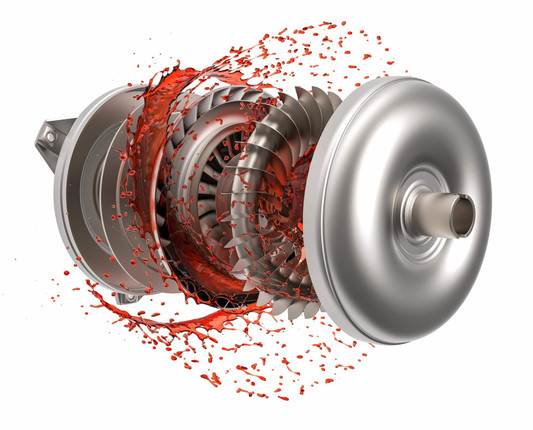
Understanding what happens inside a converter helps explain how it performs its magic. Each major part plays a specific role in moving fluid and multiplying torque.
1.The Cover
The cover is bolted to the flexplate, which means it spins along with the engine as it rotates. On lockup transmissions, the lockup clutch engages inside the cover to eliminate slip and create a more direct connection between the engine and transmission.
2. The Impeller (Pump)
The impeller, or pump, is the part of the torque converter that engages the transmission pump gears. In most converters, the pump and cover are welded together, though high-performance options are available in a bolt-together style. As the engine spins the flexplate, which in turn spins the converter, the impeller drives the transmission pump gears, creating hydraulic pressure that starts the torque multiplication process and powers the transmission.
3. The Turbine
The turbine is connected to the transmission input shaft. Fluid pushed by the impeller hits the turbine’s fins, causing it to rotate and transfer power down the driveline. This interaction is a practical demonstration of fluid mechanics, where moving fluid is converted back into mechanical force, which is the usable torque that actually turns the wheels.
4. The Stator
The stator sits between the pump and the turbine, riding on roller bearings. Its role is to redirect returning fluid so it hits the pump in the correct direction, which creates torque multiplication at low speeds. Without the stator, the converter would act purely as a fluid coupler and have no stall, meaning off-the-line acceleration would be much weaker.
5. The Lockup Clutch
Many modern converters include a lockup clutch, which mechanically links the engine and transmission once cruising speed is reached. Lockup clutches can be single-disc or multi-disc designs, depending on the application. By eliminating slip in the converter, lockup reduces heat and improves efficiency.
For example, if you have a 2,800 RPM stall converter and your cruising RPM is 2,100, the converter is still slipping and generating heat until it passes its stall speed. With a lockup clutch, the converter can be coupled up at cruise, meaning no slip occurs. This preserves the benefits of your chosen stall speed while reducing heat, improving fuel economy, and enhancing transmission durability. Choosing the right lockup style is an important part of dialing in drivability for both street and performance builds.
5. Transmission Fluid
Transmission fluid is the lifeblood of the converter. Its condition and quality determine not only efficiency but heat control and overall longevity. Any discussion of what a torque converter is has to include how critical fluid dynamics are to its operation.
Key Functions of a Torque Converter
Because of its internal design, a torque converter handles several jobs that define how a vehicle behaves both off the line and at speed.
- Torque Multiplication: The stator boosts torque during launch for stronger acceleration.
- Idle Control: The engine keeps running even when the vehicle isn’t moving.
- Load Management: Converters adapt to the demands of towing, performance driving, or heavier vehicles.
- Efficiency: Lockup clutches reduce slip and lower heat at cruise.
For builders asking “What is a torque converter?”, understanding these functions is fundamental to matching it with their vehicle’s intended use.
Performance Benefits
Choosing the right torque converter can make or break how a vehicle feels. Here’s how it affects different types of builds:
Street Performance
Higher-stall converters help engines with hotter camshafts get into their powerband faster. This means sharper response off the line for your street rod without turning everyday driving into a chore.
Classic Restorations
Dropping a modern converter into an older vehicle can dramatically improve drivability. Lockup features help trim engine rpm on the highway, cut heat, and boost fuel efficiency, all without spoiling the vintage vibe.
Restomods
Restomods demand a balance of old-school looks and new-school performance. The right converter smooths engagement, improves manners around town, and complements upgraded engines and modern transmissions.
Towing & Heavy-Duty
For trucks and SUVs, a converter with strong torque multiplication and good thermal capacity helps keep things cool under load. These units are built for heaving duty transmissions, and designed to survive heavy towing, off-road use, and long climbs without cooking the transmission.
Choosing the Right Torque Converter for Your Build
Getting converter selection right means looking at the whole combo:
- Engine torque and horsepower
- Camshaft profile
- Rear gear ratio and vehicle weight
- Intended use: street, strip, towing, restomod, etc.
- Lockup vs. non-lockup requirements
- Cooling capacity for high-load or high-heat applications
A well-matched converter gives predictable performance, better longevity, and smoother operation.
Understanding Stall Speed
Stall speed is one of the big factors in converter choice. It’s the engine rpm at which the converter starts transmitting significant power to the transmission. Think of it like a launching ramp: a higher stall speed lets the engine rev closer to its torque peak before the vehicle really starts to move.
High-stall converters are great for engines that make power higher in the rpm range, while lower-stall units feel more responsive at low speeds. Matching stall requires understanding how your engine makes torque and how the converter behaves at different rpm levels.
Conclusion
Answering “what is a torque converter?” is more than defining a part, it’s understanding how its internal components work together to multiply torque, smooth engagement, manage load, and ultimately deliver the driving experience you’re after. Whether you’re working on a street rod, a classic, a restomod, or a dedicated performance build, the right converter plays a crucial role in how the vehicle drives and how long the transmission lives.
For any builder, knowing the answer to “what is a torque converter” helps you make smarter choices, improve drivability, and boost reliability. And if you’re unsure which converter best fits your build, the team at Gearstar is ready to help you sort through the options and pick the right setup for your project. Contact us today and our team can help you select the right options for your performance transmission.