
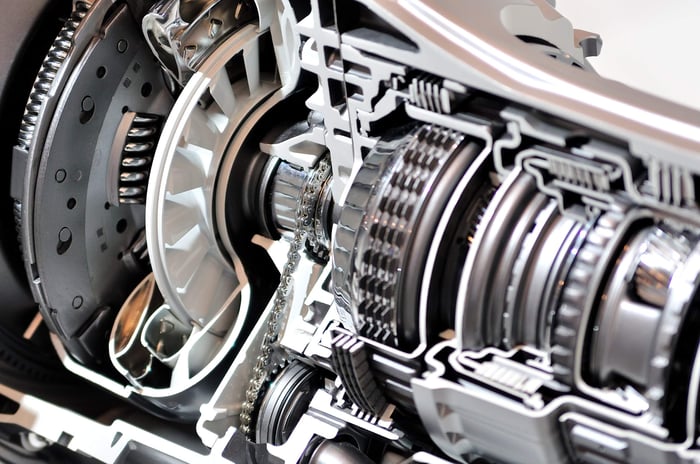
What is a Transmission? A Guide for Beginners and Gearheads
If there were a crown for “most mysterious car component,” the transmission would probably be a front-runner. For a lot of enthusiasts and weekend tinkerers, it’s one of those parts that just works. Until it doesn’t. So, what is a transmission, really? At its simplest, it’s the system that takes power from your engine and delivers it to your wheels, letting your car move smoothly at all sorts of speeds.
Whether you’re cruising a restomod down Main Street or pushing a custom street rod at the track, the transmission plays a huge role in performance, drivability, and longevity. In this guide, we’ll keep things approachable for beginners but also dive into the nitty-gritty for gearheads who want to understand what’s happening under the hood.
What is a Transmission? The Basics for Beginners
Let’s start simple. The transmission is what allows your vehicle to move at all. It takes power from the engine and manages how that power is delivered so your car can start from a stop, accelerate smoothly, and cruise efficiently. Without a transmission, your engine would have no practical way to turn that power into forward motion.
Just as important, the transmission helps keep your engine operating within its RPM limitations. By changing gear ratios, it lets the engine stay in an efficient power range while adapting to different speeds and driving conditions, whether you’re pulling away from a stoplight or settling into a steady highway cruise.
What a Transmission Does
Engines are picky, they only make power efficiently in a narrow RPM range. Try to get your car moving without a transmission, and you’d either stall immediately or feel like you’re trying to wrestle a wild animal. The transmission fixes that. By shifting gears, it balances torque (that sweet pulling power) and speed so your car moves smoothly whether you’re crawling in traffic, climbing a hill, or hammering down the highway.
Think of it as a translator. The engine speaks “engine,” the road speaks “road,” and the transmission makes sure they actually understand each other. Each gear has its role, constantly balancing torque and speed so your car behaves just the way you want it.
The Different Types of Transmissions
Not all transmissions are created equal. They each handle power differently, and knowing the differences can make all the difference for your build.
Manual Transmissions
Want full control of your car’s behavior? Manuals are for you. You operate a clutch and shift gears yourself, which means you get to decide exactly how power is delivered. Performance enthusiasts love manuals because they’re responsive, direct, and give you that intimate “I’m one with the car” feeling.
Automatic Transmissions
Automatics do the work for you, shifting gears with hydraulic systems or computers. A true performance enthusiast knows that consistency is key when it comes to dialing in a car, and an automatic transmission delivers that for you. Shift speeds in an automatic are always faster than a manual, and in track applications, it takes the human factor out of the equation when you’re trying to get the most out of your build.
CVTs and Dual-Clutch Systems
These are less common in classics, but worth knowing about. Continuous Variable Transmissions (CVTs) and dual-clutch systems offer clever, modern approaches to power delivery and efficiency. They behave differently from your standard manual or automatic, but they get the job done in their own way.
What Are the Key Components of a Transmission?
Every transmission has gears and a way to engage or disengage them. Manuals rely on a clutch; automatics rely on torque converters.
Other important bits include:
- Frictions: Provide the grip needed for smooth engagement and reliable power transfer in automatic transmissions.
- Gear sets: Decide how torque and speed are delivered.
Together, these parts ensure your engine’s power gets to the wheels efficiently, without it, your car is just a stationary paperweight.
What is a Transmission? A Deep Dive for Gearheads
For gearheads, the transmission isn’t just a bridge between engine and wheels, it’s a performance multiplier. It determines how aggressively your car launches, how smooth your shifts are, and whether your drivetrain can survive repeated abuse. If you’re building for power or speed, understanding what’s going on inside is non-negotiable.
Transmission Types and Performance
Picking the right transmission is like choosing the right weapon for a fight. Each type delivers power differently, and knowing the strengths, and quirks. of each can make or break your build.
Manual Transmissions
Manuals give you precise control over exactly when and how power is delivered. The gears, usually helical or spur, transfer torque efficiently, while the clutch lets you engage and disengage at the perfect moment.
For high-horsepower builds, upgrades like lightweight flywheels, performance clutches, and stronger synchronizers are almost mandatory. They let you rev, shift, and launch without chewing through components.
Automatic Transmissions
. Automatic transmissions are truly the favorite of many performance builders because they are faster and more consistent than manuals. Many transmissions come with close-ratio gear sets to help maximize the performance of any application. They are also able to handle higher horsepower and torque than manual transmissions, thanks to upgraded shafts, frictions, drums, planets, and other components. Add a high-performance torque converter, and you get serious torque multiplication at launch.
Torque converters in automatics are particularly important. High-stall converters let your engine hit peak power before fully engaging the transmission, giving you a stronger launch. Lockup clutches and pump/stator blade design tweak how power flows, and upgrades like shift kits or reinforced clutches make automatics responsive and reliable even under repeated heavy loads.
Dual-Clutch and CVT Systems
Dual-clutch setups are like the tech-savvy kid in the corner. They pre-select the next gear, giving nearly instantaneous shifts. Perfect for high-performance applications, but they require careful calibration and cooling to survive high horsepower.
CVTs are a different beast. They use a belt or chain to provide infinite ratios, and tuning them for performance is all about managing torque and avoiding slippage. Not common in street rods, but worth knowing if you’re dealing with modern high-tech builds.
Internal Components and Mechanics
Here’s where things get interesting: every component inside your transmission has to work together like a well-oiled machine. Skip on quality or understanding, and the whole system suffers.
Gear Sets
Automatic transmissions use planetary gear sets, with helical or straight-cut gears and allow multiple ratios and torque multiplication. The design of the teeth, material hardness, and alignment all impact efficiency and durability. Manuals rely on helical or spur gears, which are less complicated but still critical. Proper design ensures smooth power transfer without chewing up components under stress.
Clutch Packs, Bands, and Torque Converters
In automatics, clutch packs are alternating friction and steel plates that grab under hydraulic pressure. Bands hold drums stationary when needed. Torque converters are the unsung heroes, multiplying torque at low speeds and smoothing out the connection between engine and trans. Blade angles, stall speed, and lockup timing all influence launch and power delivery.
Manual clutches are simpler but just as critical. Flywheel weight, material choice, and hydraulic or cable actuation affect engagement smoothness and torque handling. Synchronizers make sure gears mesh without grinding, which becomes especially important at high RPM.
Gear Ratios
Gear ratios control how torque hits the wheels. Short (numerically higher) ratios give quick acceleration and let the engine stay in its peak power band. Long (numerically lower) ratios reduce RPM at cruising speed, improving efficiency and comfort. Choosing the right ratios is like tuning an instrument; you want it to sing at the right time without snapping under pressure.
Conclusion
So, what is a transmission? It’s the essential link between engine and wheels, shaping performance, efficiency, and drivability. Beginners benefit from understanding the basics, since it helps make informed decisions when buying or maintaining a vehicle. Gearheads? Dig into the mechanics, and you can build machines that shift perfectly, handle like a dream, and last for miles.
Looking for a high-performance transmission for your build? Gearstar’s team of experts has you covered. Browse our inventory of performance transmissions or reach out for advice and find the perfect match for your project.
More From the Shop
The ABCs of a 4 Speed Automatic Transmission
A transmission exists because an engine only makes useful power inside a narrow...

Sports Cars That Are Faster with an Automatic Performance Transmission
Some luxury cars with automatic transmission include the Lexus ISF, BMW M4/M5, Audi...