
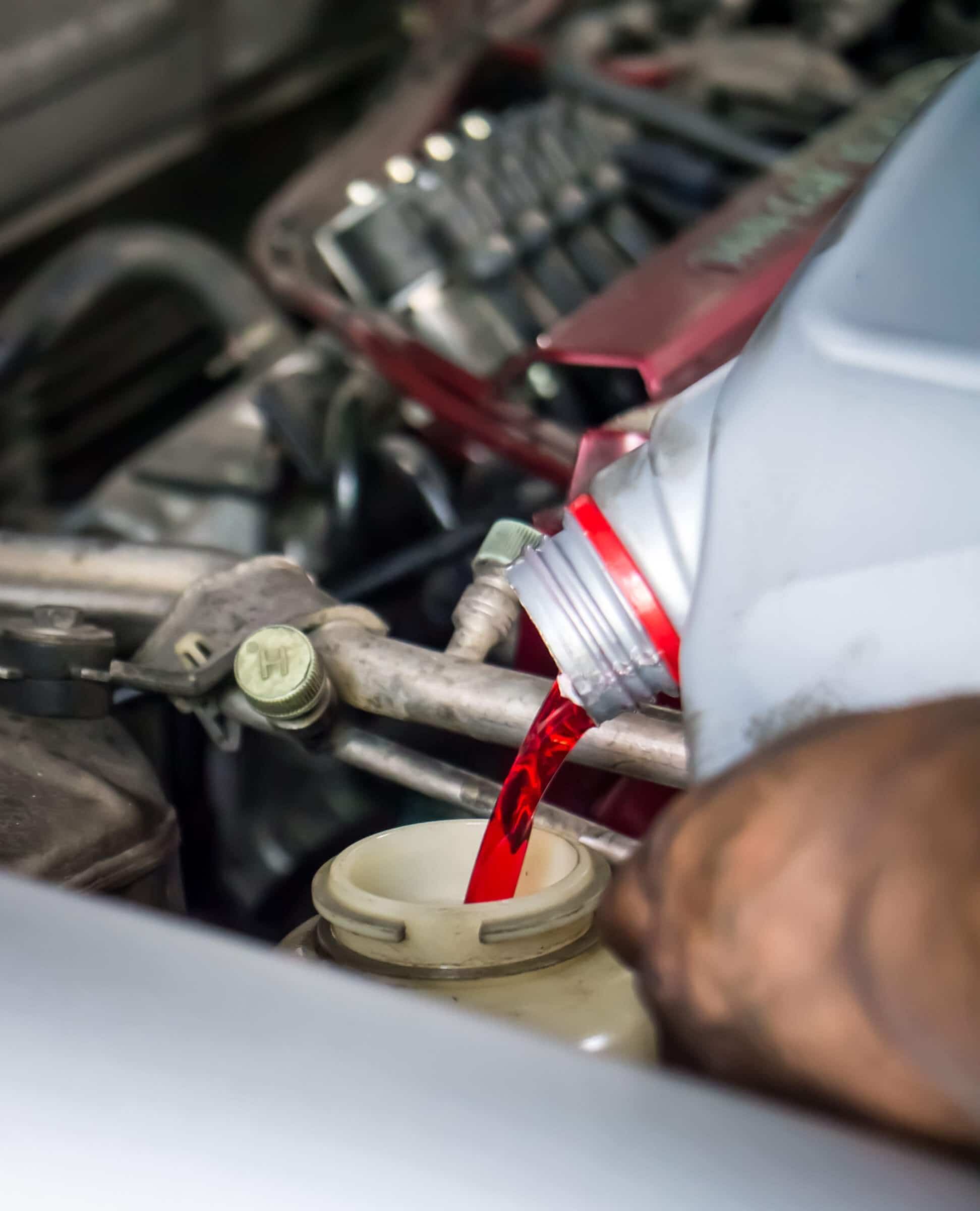
What Kind of Transmission Fluid Does a 4L60E Take?
The 4L60E has earned its place as one of General Motors' most successful automatic transmissions. You'll find it behind everything from daily-driven pickups and SUVs to street rods, muscle cars, and performance builds pushing serious horsepower. It's versatile, durable, and when maintained properly, capable of delivering years of reliable service.
One question comes up time and time again among owners and builders: What kind of transmission fluid does a 4L60E take?
The answer seems straightforward, but there's more to it than simply grabbing a bottle off the shelf. The type of fluid you choose affects shift quality, operating temperature, clutch life, and overall transmission durability. For a stock vehicle, the wrong fluid can create drivability issues. For a performance-built transmission, it can shorten the life of expensive internal components.
Let's take a closer look at what fluid the 4L60E requires.
Understanding the 4L60E Transmission
Before discussing fluid, it's worth understanding how the 4L60E operates.
Like any automatic transmission, the 4L60E relies on hydraulic pressure to engage clutches, apply bands, and control gear changes. Transmission fluid serves as both a lubricant and a hydraulic medium. Without it, the transmission simply cannot function.
Every shift you feel while driving is the result of transmission fluid being directed through the valve body and into various clutch circuits. At the same time, the fluid lubricates gears, bushings, bearings, and rotating assemblies while carrying heat away from internal components.
What Transmission Fluid Does a 4L60E Take?
When the 4L60E was originally introduced, General Motors specified Dexron III automatic transmission fluid.
Over time, fluid technology improved. GM eventually replaced Dexron III with Dexron VI, which is now the recommended fluid for virtually all 4L60E applications.
If you're servicing a stock 4L60E today, Dexron VI is the fluid you should use.
Dexron VI offers several advantages over earlier formulations, including improved oxidation resistance, better thermal stability, increased wear protection, more consistent viscosity over time, longer service intervals, and enhanced shift performance.
The fluid was designed to provide better protection in modern automatic transmissions, particularly those operating under higher temperatures and heavier loads.
Even older transmissions originally filled with Dexron III can safely use Dexron VI.
Synthetic vs. Conventional Transmission Fluid
Most premium Dexron VI fluids available today are synthetic or synthetic-blend formulations.
Synthetic transmission fluid offers several advantages, especially for vehicles that see demanding use. For starters, synthetic fluid handles heat better. It maintains its protective properties at temperatures that can quickly degrade conventional fluids. It also resists oxidation, which helps prevent varnish buildup inside the transmission.
Drivers who tow regularly, participate in motorsports, or run high-horsepower combinations often benefit from synthetic fluid because it provides a larger safety margin when temperatures begin climbing.
Heat is the number one killer of automatic transmissions, regardless of whether the vehicle is a stock daily driver or a high-performance build. Without proper transmission cooling, even a mild application can develop issues over time.
How Much Transmission Fluid Does a 4L60E Hold?
The amount of fluid required depends on the type of service being performed.
A simple pan drop and filter replacement typically requires around 4 to 6 quarts of fluid, although this can vary depending on how long the transmission pan is left off during service, since additional fluid may drain out over time. A complete fluid exchange generally requires 11 to 12 quarts.
A freshly rebuilt transmission with an empty torque converter may require even more, depending on the converter size, transmission pan, cooler capacity, and any aftermarket components installed.
This is one reason transmission builders recommend checking fluid levels carefully after installation. A deep pan or external cooler can change total system capacity significantly, and the size of the torque converter can also have a major impact on overall fluid capacity.
How Often Should You Change 4L60E Transmission Fluid?
There isn't a single maintenance interval that works for every vehicle.
A lightly driven cruiser that sees weekend use may go much longer between services than a truck used for towing or a performance vehicle that regularly sees wide-open throttle.
Severe service conditions often justify more frequent maintenance. These include towing heavy loads, frequent stop-and-go traffic, high-performance driving, off-road use, or excessive heat exposure
Gearstar recommends servicing transmissions used in light or daily driving conditions every other year. For high-performance applications or vehicles used for heavy towing, annual fluid changes are recommended.
Staying on top of regular maintenance helps prevent issues like darkened fluid or a burnt smell, which are often indicators of excessive heat or internal wear. Consistent service intervals play a key role in extending transmission life and maintaining reliable performance over time.
How to Check Transmission Fluid
Checking transmission fluid correctly is especially important during initial startup and after installing a Gearstar Performance Transmission. Following the proper procedure helps ensure the system fills safely and operates as intended.
Start by installing the dipstick and tube. Before starting the engine, check the dipstick to confirm that there is fluid present. This initial reading helps verify that the transmission has been filled adequately to begin circulation.
Once fluid presence is confirmed, the engine can be started. With the engine running, the torque converter begins to spin, which allows the pump to circulate fluid through the transmission and into the cooling system. This step is critical for properly filling internal components.
While the engine is running, recheck the dipstick and add fluid as needed until it registers appropriately. Keep in mind that transmission fluid expands as it reaches operating temperature, so final level checks should always be done once the transmission is fully warmed up. At operating temperature, the fluid level should align with the HOT FILL range on the dipstick.
Healthy transmission fluid should appear clean and relatively transparent with a reddish color. Depending on the fluid brand, the exact shade may vary slightly.
If the fluid appears dark brown, smells burnt, or contains visible debris, it's time to investigate further.
Common Transmission Fluid Mistakes
One of the most common mistakes owners make is assuming all automatic transmission fluids are the same. Using the wrong type of transmission fluid can affect shift quality and long-term durability. Hydraulic systems are designed around very specific fluid characteristics, and even small deviations can lead to unexpected performance issues.
It is always important to refer to your transmission builder to confirm the exact fluid they recommend for your specific unit. Just because a manufacturer specifies a certain fluid type does not mean that is what was used in your particular build. Builders may adjust fluid requirements based on performance goals, internal components, and intended vehicle use.
Overfilling is another common issue, since too much fluid can become aerated as rotating assemblies churn through it. Aerated fluid contains air bubbles, which can reduce hydraulic efficiency and create erratic shifting.
Underfilling can be equally damaging because the transmission may struggle to maintain proper fluid pressure. The safest approach is always to verify fluid levels carefully after service.
Special Considerations for Performance-Built Transmissions
A stock transmission and a performance-built transmission may share the same basic architecture, but their operating environments can be dramatically different.
Higher horsepower creates more heat. Hard launches increase clutch loading. Aggressive driving places additional stress on every internal component. That's why fluid maintenance becomes even more important in performance applications.
At Gearstar, every transmission is built around the customer's specific vehicle combination and intended use. Whether it's a street machine, autocross car, drag racer, or towing vehicle, proper fluid selection and maintenance play a critical role in long-term reliability.
But even the strongest transmission build can suffer if the fluid condition is neglected. Pairing quality fluid with adequate cooling, regular inspections, and proper maintenance helps protect the investment you've made in your drivetrain.
Conclusion
So, what kind of transmission fluid does a 4L60E take? The answer is Dexron VI. As the modern replacement for Dexron III, Dexron VI provides improved wear protection, greater thermal stability, and better overall performance for both stock and performance applications.
Choosing the correct fluid is only part of the equation, however. Regular maintenance, proper fluid levels, and temperature control are equally important if you want your 4L60E to deliver years of reliable service.
Whether you're maintaining a daily driver or protecting a custom-built performance transmission, the right fluid remains one of the simplest and most effective ways to maximize transmission life.
More From the Shop
700R4 vs 4L60E: What To Know Before Upgrading
When it comes to GM overdrive automatics, few transmissions get talked about more...
4L70E vs 4L60E: Specs, Internals, and Which One Your Build Actually Needs
The 4L60E and the 4L70E share gear ratios, a valve body layout that looks familiar,...
Is the Chevy 4L60E Transmission Good for Performance Builds?
Let’s discuss the Chevy 4L60E transmission for high-performance applications and...