
Will a 4L60E Torque Converter Fit a 4L65E or a 4L80E? GM Converter Compatibility, Straight
The two answers up front
- 4L60E converter into a 4L65E: yes, in most cases. These two are largely interchangeable for converter fitment, and aftermarket converters built for one are generally built for both. Many also cover the 4L75E.
- 4L60E converter into a 4L80E: no. Different spline count, different bolt pattern, different hub, different size. It does not bolt up and it should not be adapted.
Everything below is why, plus what to check before you buy a converter for either swap.
What the converter is doing, in one paragraph
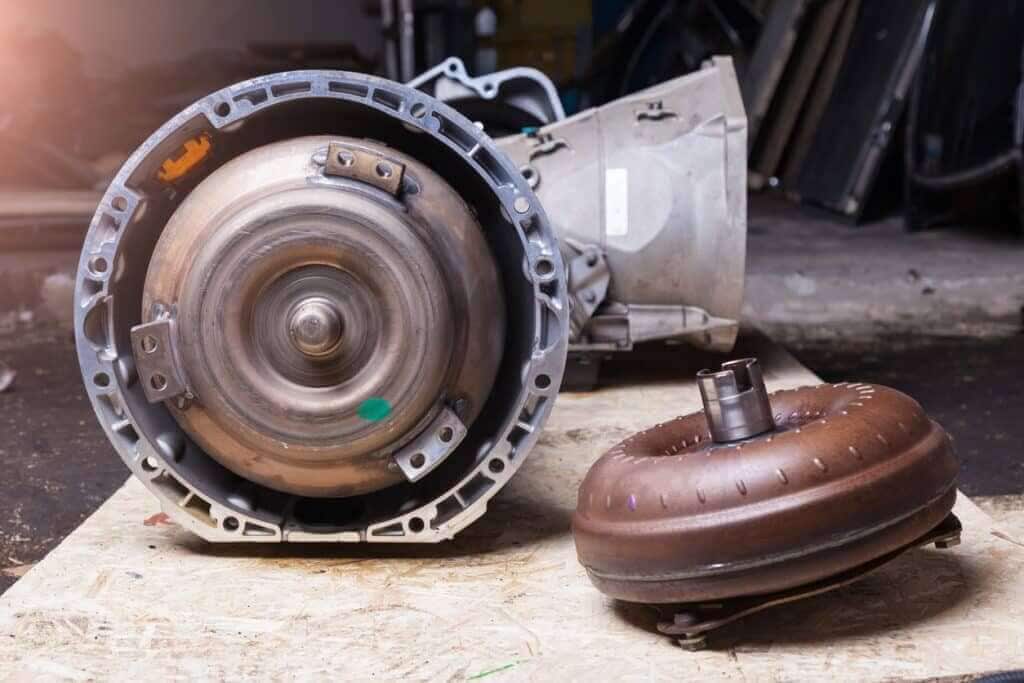
A torque converter is a fluid coupling between the engine and an automatic transmission. Three parts do the work: a pump driven off the flexplate, a turbine splined to the input shaft, and a stator between them that redirects returning fluid back into the pump so it arrives in the right direction. That redirection is what creates torque multiplication at low speed. Stall speed is the engine rpm at which the converter starts transferring real power into the transmission, and it decides how the car launches.
4L60E and 4L65E: interchangeable, with one thing to check
These transmissions come from the same family and the same case design. For converter purposes they behave as one unit, and the practical implication is that you do not need to buy a 4L65E specific converter. What you should ask instead is whether the converter you are looking at is the right one for the combination, because the stock unit that came out of a 4L60E is rarely the best piece to put into a rebuilt 4L65E.
The upgrade that pays here is a modern lockup converter. The lockup clutch eliminates slip at cruise, which cuts heat, keeps fuel economy honest, and lets you run the stall the engine actually wants. If you have a fresh, stronger transmission going in, putting the old converter back in front of it is the wrong economy.
One caveat worth stating plainly. Interchangeability inside the 4L60E and 4L65E family does not carry over to bigger jumps. Going from a 700R4 to a 4L65E, for example, is a different set of parts and a different set of checks. Do not read this section as permission to reuse a converter across a generation.
4L60E and 4L80E: not compatible, and here is the hardware
The 4L60E is a lighter duty 4 speed for moderate torque. The 4L80E is the heavy duty 4 speed built for trucks and high torque applications. They are not the same class of transmission and the converters reflect that.
| Item | 4L60E | 4L80E |
|---|---|---|
| Input shaft splines | 30 | 32 |
| Converter bolt pattern | 3 bolt | 6 bolt |
| Converter size | Smaller | Larger, higher capacity |
| Converter hub | Not compatible with the 4L80E pump | Its own hub design |
| First gear | 3.06 | 2.48 |
| Second gear | 1.62 | 1.48 |
| Third gear | 1.00 | 1.00 |
| Fourth gear | 0.70 | 0.75 |
| Reverse | 2.29 | 2.07 |
Four separate things have to line up for a converter to work: splines, bolt pattern, hub, and capacity. On this pair, all four are wrong. There are adapter approaches involving flexplate modification and custom tuning, and they exist, and they are a bad trade. You end up with a smaller converter than the transmission was designed around, less thermal capacity than the application needs, and a stack of custom parts that cost more than the correct converter would have.
While you are in there: a 4L60E to 4L80E swap also needs a driveshaft change for length and a yoke that fits the 4L80E.
What actually decides which converter to buy
Fitment is the gate, not the decision. Once you know a converter physically belongs on your transmission, these are what determine whether it is the right one.
- Stall speed. High stall, in the 5,000 rpm neighborhood, is drag territory where you want the engine near its torque peak before the car moves. Low stall, roughly 1,500 to 2,000, suits daily driving and towing. Most street builds live between those and should be specified against the cam, not the catalog.
- Engine torque output. A converter rated below your engine slips, overheats, and fails. A converter rated far above it transfers power inefficiently. More capacity is not automatically better.
- Vehicle use. Towing, racing, and street performance converters are genuinely different pieces, not the same part with different marketing.
- Lockup or non lockup. Lockup eliminates slip at cruise and produces less heat. On anything that sees highway miles, run lockup.
- Cooling. Higher stall units and towing applications make significant heat. If you are stepping up the converter, add or upgrade the external cooler at the same time.
- Flexplate alignment and balance. If the converter and flexplate do not align on bolt pattern and balance, it will not bolt to the engine, and forcing it damages parts.
Also worth doing while the transmission is out: connect and route the cooler lines properly. It is a five minute job that gets rushed constantly and shows up later as a heat complaint nobody can trace.
The practical recommendation
For a 4L65E, buy a converter specified for your combination and stop worrying about the 4L60E label on the old one. For a 4L80E, buy a 4L80E converter. In both cases, the correct answer costs less than the workaround and holds up longer.
Gearstar builds every converter for the specific transmission it ships with, and does not sell a transmission without one, because a converter matched by part number rather than by combination is a guess with a warranty on it.
Frequently asked questions
Will a 4L60E converter fit a 4L65E?
Yes, in most cases. Aftermarket converters for either generally fit both, and often the 4L75E as well.
Will a 4L60E converter fit a 4L80E?
No. 30 spline versus 32 spline input shafts, 3 bolt versus 6 bolt patterns, and incompatible hubs.
Can adapters make a 4L60E converter work in a 4L80E?
Technically people have done it with adapters, flexplate modification, and PCM tuning. It leaves you with an undersized converter in a heavy duty transmission, which is the opposite of why you chose a 4L80E.
Do the 4L60E and 4L80E share gear ratios?
No. The 4L60E runs 3.06 first and a 0.70 overdrive, the 4L80E runs 2.48 first and a 0.75 overdrive.
Should I reuse my stock converter after a rebuild?
Generally no. A fresh transmission behind a tired converter is a short term saving with a predictable ending.
Get the converter matched to the transmission
If you are mid swap and not sure which converter your combination needs, call Gearstar with the transmission, the engine, the cam, the gear, and the vehicle weight before ordering anything. The converter side of the shop is at converter.cc.
Build it once. Build it to hold.
More From the Shop
Should You Modify Your 4L60E Valve Body? Pros and Cons
Modifying your 4L60E transmission’s valve body can enhance shift performance and extend...
Why a 3200 Stall Converter is a Game-Changer for Your 4L60E Transmission
A 3200 RPM stall converter (or torque converter) can enhance your 4L60E...
Is a 4L65E Stronger Than a 4L60E?
Wondering if the 4L65E transmission is stronger than the 4L60E? In short, yes. The 4L65E...