
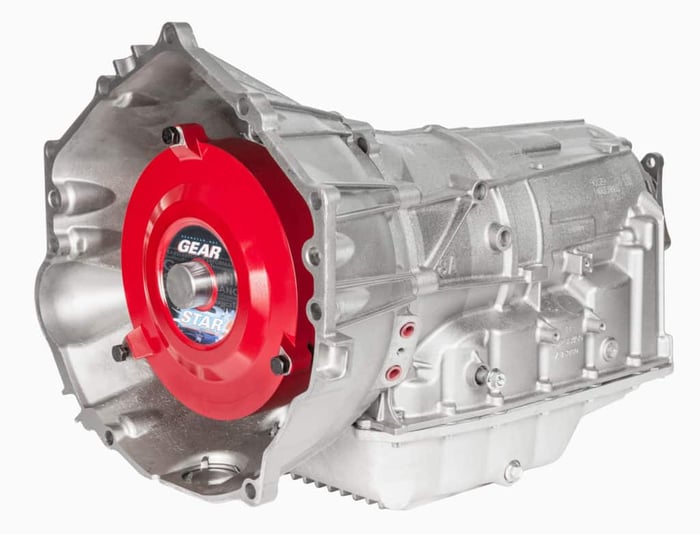
6L80 Transmission 4x4 vs 6L80 Transmission 2WD: What’s The Difference
If you've spent any time planning a late-model GM swap or sourcing a replacement unit for a truck build, you've probably run into the 6L80 pretty quickly. It shows up in Silverados, Sierras, performance SUVs, and restomods for good reason. It handles serious torque, shifts smoothly, and the aftermarket has had enough time with it to know exactly how hard it can be pushed.
But here's where people tend to get tripped up: the 6L80 4x4 vs 6L80 2WD question. On the surface, these two configurations look almost identical, and in a lot of ways, they are. The confusion comes from not knowing exactly where they diverge, and that's what gets people into trouble when sourcing a unit or planning an installation.
What Is the 6L80?
The 6L80 transmission is a six-speed automatic developed by GM to handle higher torque loads without sacrificing shift quality or highway efficiency. It was also engineered for factory applications with fuel economy in mind, allowing engines to maintain lower RPMs across the power band during normal driving. The gear spacing keeps engines in a usable power band across a wide RPM range, and the internal architecture responds well to upgrades when the build demands more. For swap builders and performance enthusiasts alike, that combination is hard to argue with.
So What's Actually Different Between the 2WD and 4x4 Versions?
The short answer: the internals are the same. Whether you're looking at a 2WD or 4x4 unit, the 6L80 transmission uses identical gearsets, clutch packs, and hydraulic control across both configurations. The separation happens at the output end, which, depending on your application, is either the most important detail or something you never need to think about.
The Output Shaft
This is the big one, and it's where 6L80 output shaft differences catch people off guard. A 2WD 6L80 transmission uses a longer output shaft designed to connect directly to a driveshaft yoke. A 4x4 unit uses a shorter shaft intended to mate with a transfer case input. Same transmission family, meaningfully different geometry at the output end.
That’s not something you can realistically solve with a simple bolt-on adapter. It defines whether the transmission fits your drivetrain at all. Confirm this spec before you buy anything.
Tailhousing and Rear Extension Housing
The rear housing follows the same logic. On a 2WD unit, you get a tailhousing with a slip yoke or a bolt-on style yoke that connects directly to the driveshaft, both of which are standard for a rear-wheel-drive setup. p. On the 4x4 version of the 6L80 transmission, that's replaced with a transfer case adapter designed to bolt directly to the transfer case.
Mounting points, bolt patterns, and overall length differ between the two. These aren't huge dimensional changes, but they affect driveline alignment and have to be accounted for during the install.
Transfer Case Integration (4x4 Only)
In a four-wheel-drive application, the transmission feeds a transfer case rather than the axles directly. GM commonly pairs the 6L80 with their 2-speed electronic shift units, and the whole system communicates through the transmission control module. That’s how the vehicle manages switching between 2WD, 4-high, and 4-low, and in some cases, full-time AWD configurations that keep all four wheels engaged while still offering selectable high and low ranges.
If you're not building a 4x4 system, none of this applies to you. But if you are, the electronic integration between the trans and transfer case is something your control system has to be set up to handle.
6L80 4x4 vs 6L80 2WD: Installation and Swap Considerations
Swapping between 2WD and 4x4 configurations isn't a bolt-on job, and the 6L80 output shaft differences are the first reason why. The 2WD unit runs a longer output shaft sized for a direct driveshaft connection, while the 4x4 unit uses a shorter shaft designed to mate with a transfer case input. Those aren't interchangeable without pulling the transmission apart, and once you're doing that, you're already in full rebuild territory.
Beyond the output shaft, driveshaft length changes when a transfer case enters the picture, crossmember positioning may shift, and the driveline angle needs to be checked and corrected. On the electrical side, the transmission itself is largely the same across both configurations, but a 4x4 setup requires the vehicle control system to manage transfer case operation as well, which adds a layer of integration your build has to account for.
The practical advice here is straightforward: source the right configuration from the start. Conversion is possible, but between swapping the output shaft, replacing the rear housing, and verifying the rest of the driveline geometry, you're looking at a significant amount of work and cost. That's time and money better spent on a unit that was already built for your application.
Does One Version Make More Power Than the Other?
No. This is probably the most common misconception about the two configurations. The 4x4 version is not a "heavier duty" transmission. The internal architecture is the same. Strength comes from build quality, clutch materials, valve body calibration, heat management, and tuning, not from whether the unit happens to feed a transfer case.
The 4x4 drivetrain does add rotating mass and some frictional load, but that's a drivetrain difference, not a transmission difference. In terms of real-world feel, a 2WD setup will feel lighter and more direct in performance applications, while 4x4 provides obvious advantages in traction and stability under load. But that's the system talking, not the transmission itself.
Which One Do You Need?
It really does come down to the application.
A 2WD 6L80 makes sense for rear-wheel-drive builds, performance applications, engine swaps where 4x4 isn't in the picture, and restomods where driveline simplicity matters. A 4x4 unit is the right call for trucks, tow rigs, and off-road builds where multi-surface traction is part of the job description.
Parts availability and cost can also factor into the decision, depending on your market. In some areas, one configuration is significantly easier to find than the other, which occasionally makes the conversion conversation worth having. Though if you are purchasing a new transmission from a national retailer like Gearstar, local availability isn’t a concern.
The Bottom Line
The 6L80 is fundamentally the same transmission in both configurations. What changes is how it connects to the rest of the drivetrain, and those changes in the output shaft, rear housing, and transfer case integration matter a lot in practice, even if they don't affect what the transmission is doing internally.
Match the configuration to the vehicle layout, confirm your output shaft before you commit to a purchase, and don't let anyone talk you into believing one version is inherently stronger than the other. Both are capable units. The right one is whichever one actually fits what you're building. If you need help choosing, the team at Gearstar is here to help. Contact us today to speak with one of our expert techs.
Key Takeaways
- 6L80 output shaft differences are the defining factor — the 2WD unit runs a longer shaft for direct driveshaft connection, while the 4x4 unit uses a shorter shaft designed to mate with a transfer case input. These are not interchangeable without a full teardown.
- The internals are identical — clutch packs, gearsets, and hydraulic control systems are the same across both configurations. Neither version is inherently stronger than the other.
- The rear housing follows the output shaft — mounting points, bolt patterns, and overall length differ between 2WD and 4x4 units, and both have to match your drivetrain layout before anything else.
- Transfer case integration adds electronic complexity — in a 4x4 setup, the transmission control module manages communication between the transmission and transfer case. Your control system has to be built to handle that.
- Conversion is possible but expensive — swapping configurations means pulling the transmission to replace the output shaft and rear housing, which puts you into full rebuild territory. Source the right unit from the start.
- Match the configuration to the build — 2WD for performance, restomod, and RWD applications; 4x4 for trucks, tow rigs, and off-road builds where traction across multiple surfaces is part of the job.
- Restomod builds may require custom transfer case adapters — depending on the transfer case you plan to run, different adapters may be needed to ensure proper fitment and function. Planning this early, or working with a knowledgeable builder, can help avoid compatibility issues later on.
More From the Shop
Which is better, 200R4 or 700R4?
The 200R4 vs 700R4 debate has been going on for decades, and for good reason. Both...
Essential 6L90 Transmission Upgrades
If there’s one thing GM got right with the 6L90 transmission, it’s that they built...

Automatic Transmission vs Manual: What You Need to Know for Performance Builds
When building a performance car, restoring a classic, or assembling a street/strip...