
How Long Does a Transmission Last? Mileage Is the Wrong Number
How Long Does a Transmission Last Behind a Built Engine?
A healthy automatic in a stock car runs 150,000 to 250,000 miles. Behind a built engine, that number stops predicting anything, because the loads that decide the answer are the ones you added: torque, gear, tire, converter, and heat.
Two 700R4s can leave the same bench on the same day. One goes into a mild driver and outlives the owner's interest in the car. The other goes behind a big-inch motor with 3.73s and a 28 inch tire, gets driven the way that combination begs to be driven, and is apart in two seasons. Same parts, same assembly, different job. Lifespan is set by the match between the unit and the combination, not by the odometer.
What the Mileage Ranges Are Actually Worth
The published ranges are a starting point, and worth reading as service-life expectations for factory duty, not promises.
| Type | Typical service life | What actually moves the number |
|---|---|---|
| Automatic | 150,000 to 250,000+ miles | Fluid condition and heat |
| Manual | 200,000 to 300,000+ miles | Clutch replacement and launch habits |
| CVT | 100,000 to 200,000 miles | Fluid service intervals, heat tolerance |
| Built performance automatic | 200,000+ miles when matched to the combination | Whether it was spec'd to the torque it lives under |
Manuals last longer because there is less hydraulics and less electronics to go wrong, not because they are tougher in every respect. CVTs are the least forgiving of a missed fluid service. A performance automatic is not automatically the longest lived of the four. It is only long lived if it was built for the specific car, which is exactly where most of them fall down.
The Five Things That Decide Lifespan
Heat is first, and it is not close. Fluid that runs hot oxidizes, stops protecting the clutch material, and lays down varnish in the valve body. Everything else on this list is really a way of making heat.
- Torque, not horsepower. A cam and a compression bump change what the clutch packs have to hold on every shift. A factory pack sized for the factory number does not get a second opinion.
- Gear and tire. Steep gear and a sticky tire multiply what reaches the input shaft. That combination breaks more transmissions than raw power does.
- Converter match. A stall that does not suit the torque curve either flashes past useful RPM or slips at cruise, and both put heat into the fluid.
- Cooling capacity. Stock cooling was sized for stock power. Repeated launches or any towing puts the fluid outside its working range and keeps it there.
- Fluid service and leaks. Dark fluid and a slow drip are the two cheapest things on this list to fix and the two most commonly deferred.
Driving style belongs in the same conversation, but honestly: nobody builds a car like this to drive it gently. The answer is not to drive it softer, it is to build the transmission for how it actually gets driven.
How Long Can a Bad Transmission Last Before It Lets Go?
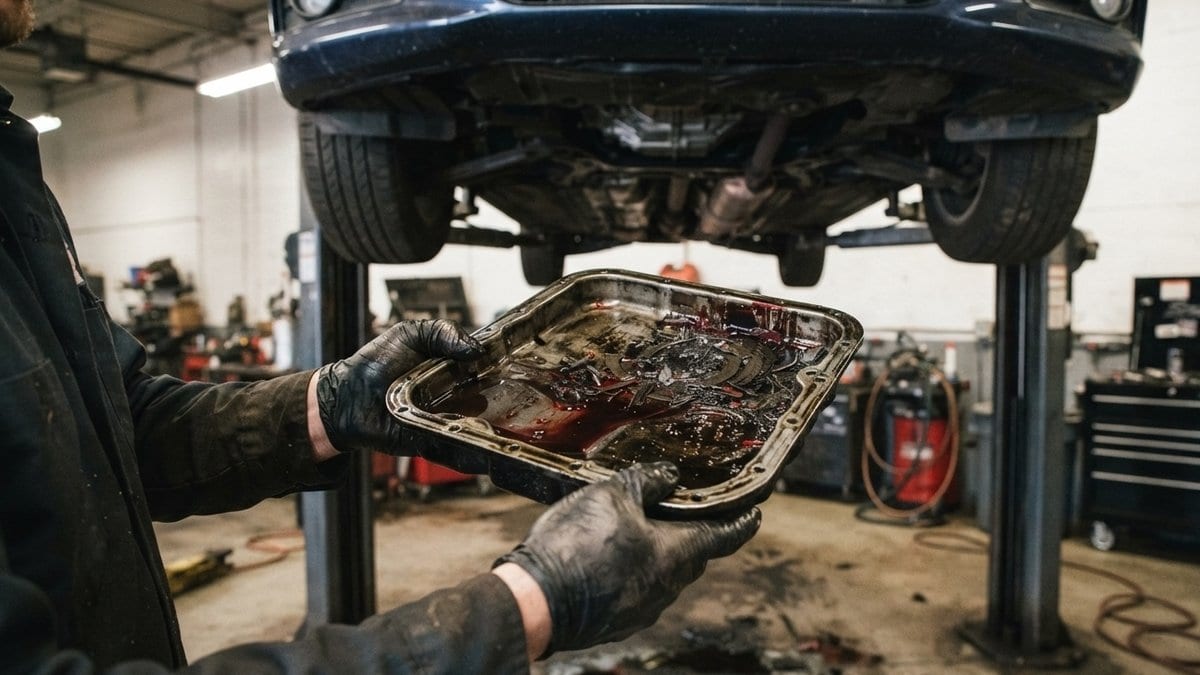
Longer than it should, which is the trap. A slipping unit will often drive for months. What it will not do is stop causing secondary damage while it does. Slip generates heat, heat cooks the fluid, cooked fluid carries clutch material through the cooler lines and the valve body, and a job that started as a clutch pack ends as a full teardown with contaminated lines and a converter that has to be cut open.
The signals that say the end is near are the familiar ones: delayed engagement into drive or reverse, RPM climbing without road speed, flare between gears, a burnt smell, dark fluid with grit on the magnet, a whine that tracks RPM, harsh shifts that were never that harsh before, and finally the car that revs and will not pull. When those show up on a modified car they are not a maintenance reminder. They are a bill that grows every week you drive on it.
Repair or Replace: The Honest Line
Not everything needs a replacement. The question is whether the failure is contained to one component or has already been through the whole unit.
| What you have | Repair | Replace or build |
|---|---|---|
| Low or contaminated fluid, worn seals, leaking gasket | Yes | No |
| Faulty sensor, solenoid, minor valve body issue | Yes | No |
| Slip under load with clean fluid | Inspect first | Likely |
| Gritty fluid, damaged clutch packs or hard parts | No | Yes |
| Second or third failure on the same unit | No | Yes |
| Repair estimate approaching replacement cost | No | Yes |
| Engine got built and the transmission did not | No | Yes |
The last row is the one that matters most on a car like yours. If the motor changed and the transmission did not, a repair only returns the unit to the spec that already proved insufficient. Same clutch count, same hard parts, same line pressure calibration, same outcome on a longer timeline. That is not a repair, it is a deposit on the next one.
How Long Does a Rebuilt Transmission Last?
That depends entirely on what "rebuilt" meant. A chain-store rebuild replaces what failed with the same parts that failed and hands the car back. Expect a fraction of the original service life, because nothing about the original mismatch was addressed.
A unit built to the combination is a different question. The clutch count, friction material, hard parts, line pressure, and converter are all chosen against the torque that will actually go through them. Built that way, a performance automatic will run past 200,000 miles and outlast several rounds of engine work, which is the only version of this answer worth paying for.
Build It for the Combination and Stop Counting Miles
Most transmissions behind modified engines do not die of old age. They die of being spec'd for one power level and asked to live at another.
That is why Gearstar builds them one at a time. One technician assembles a unit start to finish, so there is a name attached to the work. It is matched to your engine, rear gearing, tire size, converter target, and how the car actually gets driven. It is dyno tested for 100 miles before it ships, and you get the dyno video of your own transmission, not a stock clip. The build carries a warranty.
Tell us the combination: engine, cam, gear, tire, converter target, and weight. We will spec the unit around it and you can go back to thinking about the rest of the car.
Built to the combination, not to an average.
FAQs
How long does a transmission last? A stock automatic typically runs 150,000 to 250,000 miles, manuals 200,000 to 300,000, and CVTs 100,000 to 200,000. Behind a built engine, mileage stops being the useful number. Torque, gear, tire, converter match, and fluid temperature decide the answer, and a unit spec'd to the combination will outlast one that was not by a wide margin.
How long does an automatic transmission last? 150,000 to 250,000 miles under factory duty with fluid service on schedule and temperatures in range. Add a cam, a gear change, and a sticky tire and the clutch packs see loads nobody spec'd them for, which pulls that number down fast. Cooling capacity and clutch capacity are the two things that decide where a modified car lands.
How long does a rebuilt transmission last? It depends on what got rebuilt into it. A like-for-like rebuild returns the unit to the same spec that already failed and tends to fail again. A unit rebuilt to the combination, with clutch count, hard parts, line pressure, and converter chosen for the actual torque, will run past 200,000 miles and outlast the next round of engine work.
How long will a rebuilt transmission last if the engine was built after it? Not long, and this is the most common version of the problem. A rebuild done to the old spec is sized for the old torque. Once the motor makes more, the same clutch packs slip, the fluid heats, and the unit comes back apart. Rebuild to the current combination, not to the one that was in the car when the transmission was new.
How long does it take to replace a transmission? The removal and installation itself is typically a shop day or two depending on the car and the driveline work involved [confirm typical shop hours for R and R]. The real timeline is sourcing the right unit. Ordering a transmission built to your combination adds lead time up front and removes the second removal later, which is the trade worth making.
How long does a transmission rebuild take? A shop rebuild runs days to weeks depending on parts availability and how much hard-part damage is found once it is open [confirm typical rebuild turnaround]. A custom build is scheduled work, assembled by one technician and dyno tested for 100 miles before it ships, so plan the install date around the build rather than the other way around [confirm current Gearstar build lead time].
Can I keep driving a slipping transmission? You can, and it costs you. A slipping unit will often drive for months while it cooks the fluid, sends clutch material through the cooler lines, and takes the converter with it. Slip is the last cheap symptom you get. Fixing it the week you notice it is the difference between a clutch pack and a full teardown.
More From the Shop

Car Transmission Repair Cost: What a Built Car Actually Pays
Ask three shops what a transmission repair costs and you get three numbers, and...
Rebuilt, Remanufactured, or Built: Three Words the Industry Uses Loosely
Ask three shops for a transmission quote and you might get three very different...
What Kind of Transmission Fluid Does a 4L60E Take?
The 4L60E has earned its place as one of General Motors' most successful automatic...